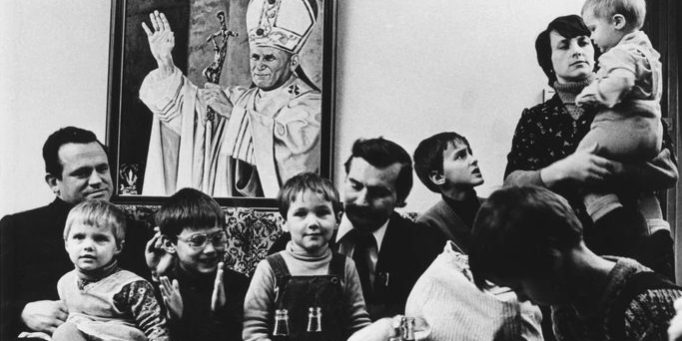
In a quaint Polish village, Zosia, aged 87, beamed with joy as she cradled her great-granddaughter, little Zosia.
The two women share a bloodline and a common name.
One was named early in the 20th century when Polish culture was modernising, and the other in a country that’s starting to look back to those pre-war names.
This heartwarming scene shows Poland’s rich naming traditions, where old meets new. Names like Zofia and Jan are becoming popular again among new parents.
In fact, Zosia was the most popular name for a baby girl in Poland in 2022
In this article, we’ll show you the significance of ‘older’ and traditional Polish names, why they’re being given to newborns more now than ever, and the impact that has.
Polish Names & Heritage
Polish names have a given name followed by a surname. That is, two names and no middle name.
Families often pick names from Christian or Slavic traditions, honouring saints or ancestors.
Some names even touch on traditional Polish mythology

Female Polish names usually end with -a, while males end with consonants or other vowels. This is a little tidbit that’s common in many slavic names.
Polish surnames often end in -ski or -ska, originally linked to nobility or land ownership. These endings change with gender and group, showing the language’s complexity.
Common surnames like Nowak, Kowalski, and Wiśniewski reflect ancestral jobs or traits.

Traditional Polish Names
Some traditional Polish names that are being used more regularly are as follows:
Male Names:
- Kazimierz
- Stanisław
- Władysław
- Zbigniew
- Józef
- Tadeusz
- Wojciech
- Mieczysław
- Bolesław
- Janusz
Female Names:
- Zofia
- Helena
- Jadwiga
- Kazimiera
- Cecylia
- Wanda
- Marianna
- Genowefa
- Irena
- Bogumiła
The Origins and Evolution of Polish Names
Polish names have a long history, starting in the 12th century.
Back then, old Polish last names didn’t stay in families for long. They came from Slavic roots and showed skills, animals, and plants.

Names like Róża (rose) and Kalina (viburnum) are still common today.
Old Slavic surnames came from four main sources:
- Occupational, based on a person’s trade
- Descriptive, reflecting unique qualities
- Geographical, indicating residence
- Patronymic, derived from father’s given name
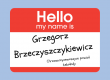
Polish names can be notoriously hard to pronounce. This is due to the fact that the name is trying to convey a lot of information – a job, a region, a skill, or any of the above dot points.
In the 14th to 19th centuries, two-word names became popular among nobility and townspeople. By the 17th century, this was common, but surnames were still changing. Christianity’s influence on Poland brought new names based on Apostles, Saints, and Martyrs.
By the 1500s, Polish naming customs were well-set, making it hard to trace family names’ origins.
Polish surnames evolved until the 18th century, when borders were somewhat arbitrary, and cultures were much more easily influenced.

Now, Polish names mix ancient Slavic roots with Christian influences, creating a unique cultural mix.
The Genesis and Americanisation of Traditional Polish Names
How does Wojciech become George?
It has a lot to do with war, emigration and finding a new and better life.

Polish immigrants arrived in America, Canada and Australia and changed their names to fit in.
Between 1892 and 1924, Ellis Island checked up to 11,000 immigrants every day – most from Europe, many from Poland.
Their first big challenge was keeping their identity in a new world while also integrating.
They had to go through a long inspection and identification process which was often based on documents like ship manifests and documentation all in Polish. If there were mistakes, they could be sent back to Europe.
After getting off the ship, many started to adapt to the American way of life. That included name changing, or the Americanisation of names.
- Józefa became Josephine
- Wojciech was listed as Albert and George in others.
- Franciszek became Frank
- Florentyna was Florence
- Rozalia was called Rose.
Many settled in cities like Chicago. There, Polish Chicago (affectionately referred to as ‘czikago’) had over fifty Polish Catholic parishes, which were like community hubs in a new land.
These areas had lots of jobs in factories and steel mills. Polish immigrants came for work and a better life.
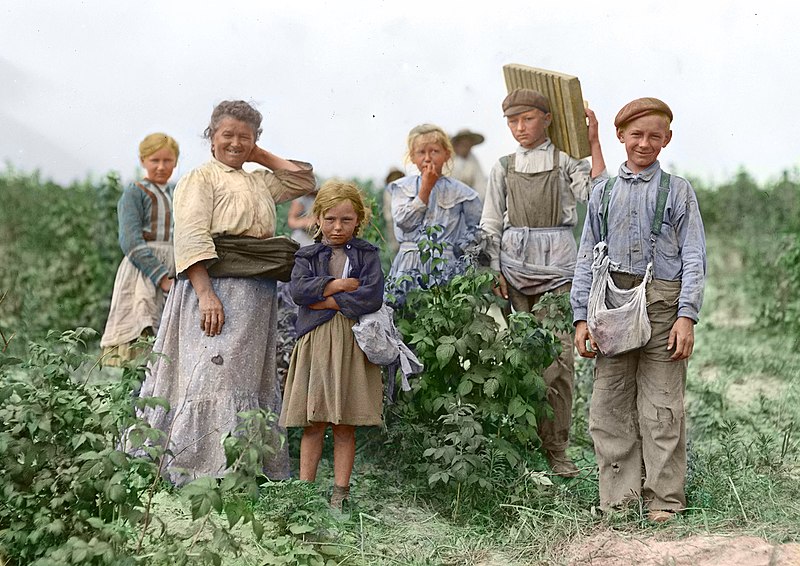
During the week, they were George and Rose, but on the weekend they were Wojciech and Rozalia.
This helped them feel like they belonged but were also not forgetting where they came from.
As these 1st generation immigrants started to age and their children grew up, tracing back family trees became more and more difficult.
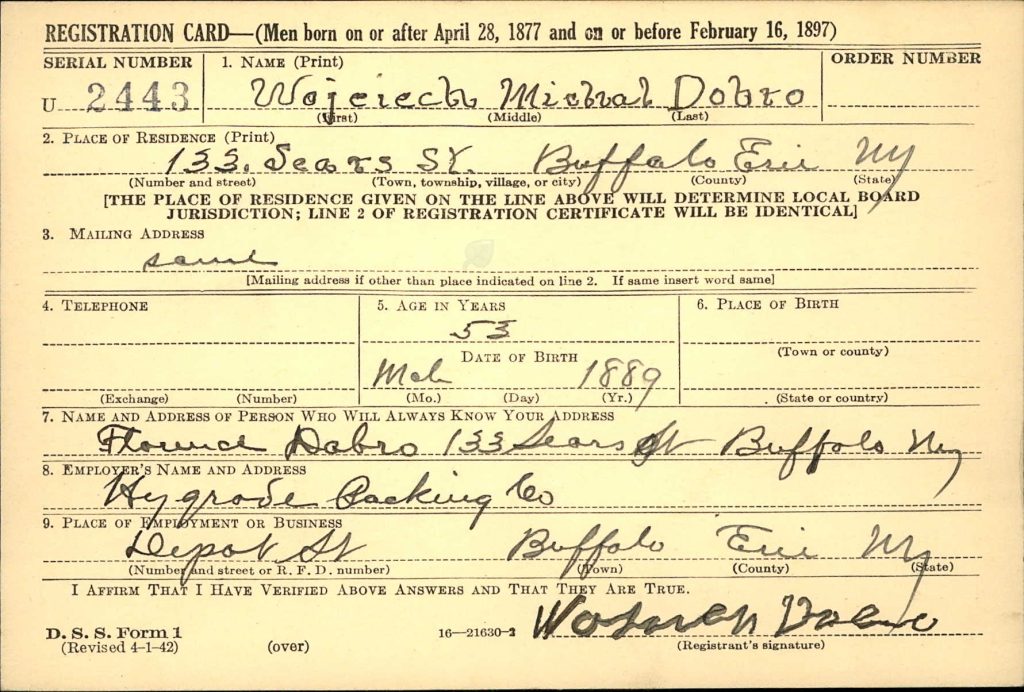
Here’s a fantastic example of a family tracing their genealogical footsteps back to Poland, having nothing more than an Americanised name.
Over time, the influence of Poles living abroad started to show. These famous Polish people became Politicians, explorers, film-makers and more.
In my home country, Australia, many things come from Poland that I never realised until I learned about the role Poles played in shaping Australia.

Read my article on the Australian things that are actually Polish to learn more.
FAQ
What are some traditional Polish names?
Traditional Polish names for girls include Lena, Zuzanna, Julia, Maja, and Zofia. Boys are often named Jakub, Kacper, Antoni, Filip, and Jan. These names come from Slavic, Christian, Germanic, or Lithuanian roots, showing their rich heritage.
How did Polish surnames originate?
Polish surnames started in the 13th century, first for the upper classes. They came from jobs, descriptions, places, or family names. Nobles used coats of arms that helped create these surnames.
What is the typical structure of Polish names?
Polish names usually go as [personal name] [FAMILY NAME]. Personal names can come from many roots, and family names often end in -WICZ, -SKI, -CKI, or -DZKI. Girls’ names add -SKA, -CKA, or -DZKA to the end.
What is the cultural significance of Polish names?
Polish names often carry deep cultural and religious meanings. They’re named after saints or historical figures. Celebrating name days is big in Eastern Poland. Using nicknames shows love and closeness.
How do Polish names reflect gender?
Polish names clearly show if someone is a girl or a boy. Girls’ names usually end in -a, and boys’ in consonants. Surnames also have gender-specific endings. Women may keep their maiden name, take their husband’s, or use both.
What regional and linguistic influences can be seen in Polish names?
Polish names show the impact of languages like Latin, German, and Russian. This leads to different spellings and ways of saying them. In some areas, surnames linked to land ownership are common.