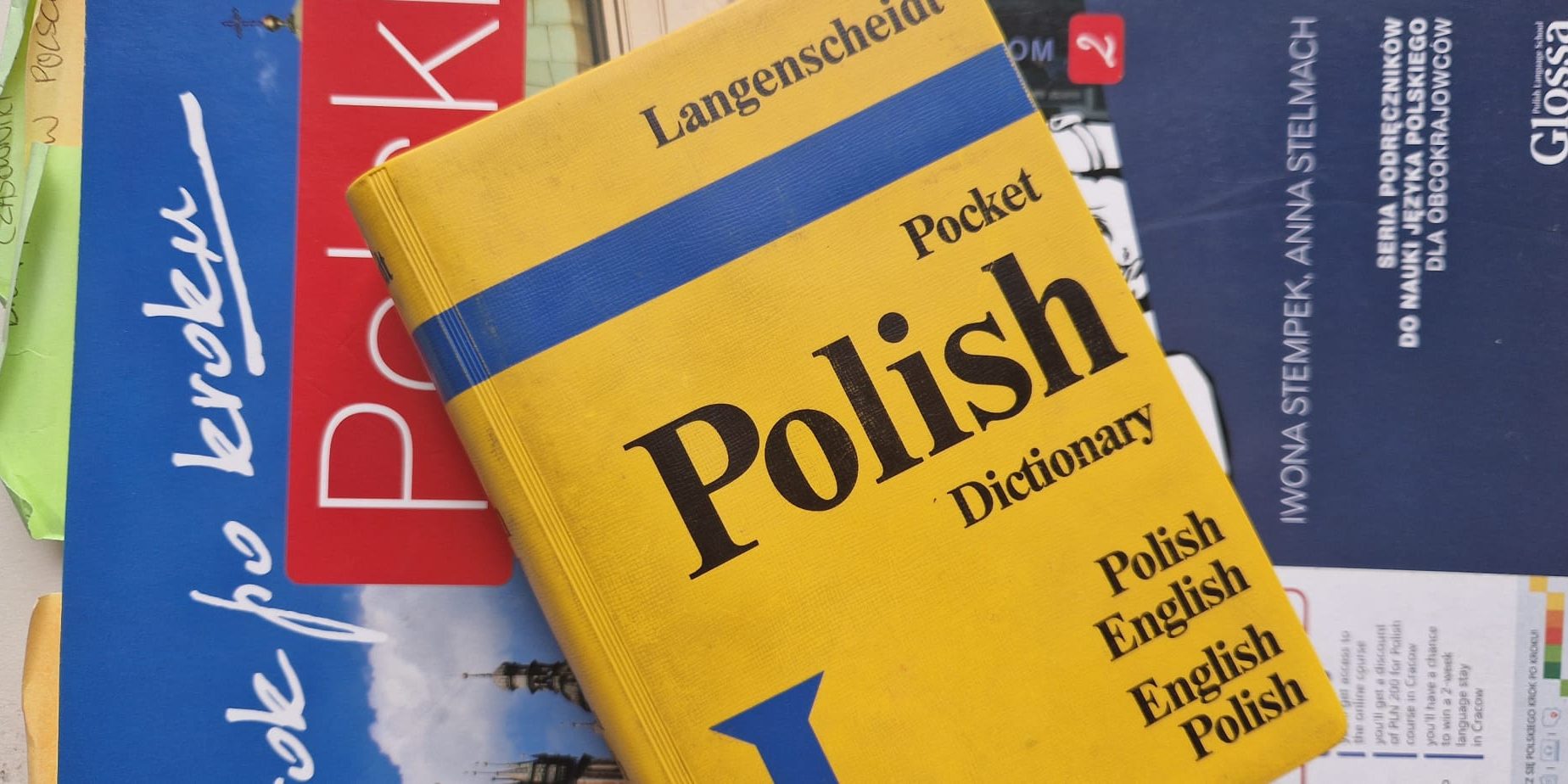
Understanding the Polish Language & What Makes Polish Unique.
I started my journey with the Polish language over 10 years ago.
It was more than memorising grammar and hard to pronounce words. My goal was to learn a life skill to aid my new life in Polska. I needed to understand complex immigration applications and decode conversations with internet suppliers.
For an English speaker, Polish is bloody hard, and this experience was like trying to assemble IKEA furniture using instructions written in hieroglyphics, while blindfolded, on a rollercoaster.
My learning path was unique. I avoided traditional classroom methods. Instead, I embraced a cycle of practice, making mistakes, and improving. My self-taught journey was aided by a fantastic teacher that I found on iTalki.
The grammar of Polish, with its intricate inflections, presents both challenges and beauty.
Here’s what I can tell you about the Polish language. Read on if you’re interested in learning to speak Polish.
- The Polish language is part of the West Slavic group, adding a layer of intrigue for learners familiar with other Slavic or Latin-based tongues.
- Yes, it’s a hard language with 7 different forms and difficult grammar.
- There’s a plethora of different ways to learn Polish – experiment and find what’s right for you.
- Acknowledgment of the beauty of Polish syntax is imperative for appreciating the full richness of the language.
- Understanding Polish language characteristics, like its unique alphabet and inflection, is crucial in achieving fluency.
- Personal experiences and practical applications can profoundly impact one’s mastery of Polish beyond traditional patterns of education.
- Polish speakers can generally understand bits of Czech, Ukranian and other Slavic languages.
- Many Polish words come from English – telefon, weekend, komputer.
- Engagement with the language through personal endeavors, such as navigating legal matters or residency, enriches one’s connection to Polish culture.
Polish Language Origin and Historical Influence
Polish has roots that go back to Proto-Slavic. It’s part of the West Slavic branch. Knowing about ‘old’ Polish helps you decide older text, such as the masterpiece that is Pan Tadeusz.
The language changed a lot during the Jagiellonian era, becoming what we know as old Polish.
 Old Polish was shaped a lot by Latin. This was because Poland became Christian and needed new words for new concepts. Latin words and ways of building sentences became part of Polish. Being close to Czech and other Slavic languages also added to Polish’s uniqueness.
As Poland grew stronger, Polish became the official language. This was during the Jagiellonian dynasty’s rule. Polish was everywhere – in the government and in the church, in bars and marketplaces.
This time also brought Polish writing to the next level. There were big changes to how Polish was written, helping literature and learning.
The Development of Modern Polish
The Polish language’s evolution provides an intriguing look into the area’s history. It shows how politics, culture, and society have shaped language development.
One key period is the “Golden Age” of Polish literature during the 16th and 17th centuries. This era benefitted from the Polish-Lithuanian Commonwealth’s influence, leading to a burst of literary and intellectual growth. This period greatly pushed forward Polish literature.
During the Polish-Lithuanian Commonwealth, significant efforts were made to standardize Polish.
Work was done on spelling, grammar, and pronunciation norms. Samuel Linde continued this work in the Enlightenment with his innovative dictionaries. His dictionaries not only unified Polish language rules but also aimed to cleanse the language of foreign words – big deal in an era with Poland didn’t actually exist.

He wanted to bring back older Slavic words, building a unique linguistic identity.
The ancient roots of Polish can be traced back to the Proto-Slavic language. This early language laid the groundwork for what Polish is today. It included complex verb aspects and unique consonant uses. These were innovations from the Proto-Slavic speakers in Eastern Europe during the Middle Ages. The Piast dynasty’s rule also influenced the language by promoting its use in official settings. This helped Polish develop into a standardized language used across Poland.
The story of Poland’s language development, especially during the Commonwealth era, speaks of linguistic and cultural diversity. It highlights Poland’s cultural wealth and the Polish language’s resilience and flexibility through time. Polish shows its ability to evolve while keeping its ancient roots relevant. This illustrates the enduring nature of Polish’s linguistic journey.
The Characters of the Polish Alphabet and its Unique Sounds
When I began learning Polish, the Polish alphabet looked interesting but hard. Living in Poland for ten years taught me to value its unique features. These elements distinctly define the linguistic scene of this beautiful language.
The Adaptation of Latin Script and Added Polish Letters
The Latin script was modified to include specific Polish sounds. This led to new letters not found in English. Let’s dive into the details of the Polish alphabet:
| Letter | Diacritic Type | Example Word | English Approximation |
|---|---|---|---|
| Ą | Ogonek | Zamąż | As in ‘on’ |
| Ć | Acute Accent | Ćma | As in ‘cheat’ |
| Ł | Stroke | Łódź | As in ‘wood’ |
| Ń | Acute Accent | Pełnię | As in ‘canyon’ |
Diacritics like the acute accent and ogonek add sophistication to the Polish alphabet. They also deeply shape understanding Polish pronunciation. For instance, “Zażółć” (yellow) shows how these marks add richness, helping learners speak precisely.
The unique phonetic constructs in Polish make some sounds hard but interesting.
Take the tongue twister “W Szczebrzeszynie chrząszcz brzmi w trzcinie.”
It involves rolling Rs and a sz sound, challenging yet exciting to master.
Exploring the Polish language through its alphabet and sounds has deepened my appreciation for it. Each letter and diacritic plays a crucial role in forming words and sentences. Mispronouncing something simple can change the meaning of an entire sentence!
Dialectal Variations Within the Polish Language
The landscape of Polish dialects shows us the rich variety and history that shape today’s Polish language. Even though Poland may seem linguistically uniform, its regions tell a different story. There are several key dialects such as Greater Polish, Lesser Polish, Masovian dialect, and the Ilesian dialect.
The Masovian dialect covers a wide area around Warsaw. It includes many sub-dialects that reflect the history of central and eastern Poland. The Ilesian dialect, or Silesian, is unique in its features and cultural significance. Nearly 500,000 people claim it as their language. Its status as a separate language by SIL International shows its distinct spot in Polish linguistics.

Exploring these regional linguistic variations helps us appreciate Polish more. It also shows how language changes with society’s shifts. Each dialect captures a unique slice of Poland’s identity.
Learning about these dialects gives us more than words. It shows us how people, empires, and communities have moved and changed. Every dialect, from the Goral ethnolect to the Silesian tones, shows a part of Poland’s story. They’re not just ways of speaking but are records of endurance and change.
My Personal Encounter with the Polish Language
I began learning Polish with excitement and challenges. Mastering the language meant diving into its complexity daily. I discovered the beauty of a culture very different from my own. There were incredibly challenging times – studying for my Polish B1 exam, I wondered after 7 years of learning, how long does it take?
The Polish language seemed hard at first. I started with lots of ‘Polish for beginners‘ and information for young Polish kids.

In reality, saying words like “trzy” took many tries. Even simple things, like giving out my phone number, were problematic.
I often mixed up numbers like “trzynaście” (thirteen) and “trzydzieści” (thirty). This led to funny but frustrating mistakes. A lesson on why “raz” is used for ‘one’ instead of “jeden” showed me the language’s depth. Polish names also created a challenge!
Learning Polish as a second language meant understanding the culture. From shopping misunderstandings to choosing the right elevator button, each moment was a lesson. Once I got deep enough, I started to see how certain words, or lack of equivalent words in English, influenced Polish people.
Being on the ground and using the Polish language in Poland taught me how language is used in real life. Trying to speak Polish with locals showed me their respect for my effort.
This journey wasn’t just about speaking Polish well. It was about connecting with the culture that shapes the language. This made my learning experience both tough and rewarding.
Conclusion
Will I use the Polish language outside Poland? Probably not, no.
But as long as I live and work in Poland, knowing the language is a phenomenal asset.
Looking back, learning Polish was more than just gaining new skills. It was about embracing the challenge of a complex language. I didn’t follow the usual path. Living in Poland for years, I found traditional methods didn’t suit me. But, through hard work, I became proficient in Polish.
The journey taught me about more than words and sounds. It was an exploration of Poland’s rich culture and history. This adventure changed me deeply. Starting from scratch to becoming fluent showed me the value of taking on tough challenges.
Resources like the Cambridge Dictionary show how languages reflect unique ways of thinking. Learning to express complex ideas in Polish as well as in English was a significant achievement. In the end, loving the process of learning languages brings great rewards. It opens our hearts and minds to different cultures and ideas.