I moved to Poland over ten years ago, starting an adventure in language learning. My Australian background didn’t help much with my Polish language skills, a language spoken by about 50 million people. It was more complicated than English. But now, I can proudly say I’ve learned Polish in some surprising ways.
I found myself doing many things in Polish, like getting permanent residency, understanding medical terms during surgery, and dealing with legal issues. These experiences showed me how to learn Polish quickly. It wasn’t about memorizing words but about diving into each experience fully. I discovered resources like PolishPod101, which were different from the traditional ways of learning Polish I first encountered.
Learning Polish felt like solving a personal puzzle. Each word, sentence, or understanding smile from someone was a piece fitting into place. Listening to sentences on Glossika and whispers from Pimsleur’s Polish in my earphones was part of my daily routine. Reading helped my vocabulary grow through real conversations. It took me over 10 years, but I’m now confident with my Polish
I tried many learning methods outside the typical classroom, like Assimil and Teach Yourself Polish. These methods helped me find my learning groove. Now, I want to share how you, too, can learn Polish quickly and easily.
Key Takeaways
- Dedication to language learning can make up for a lack of special talents or high intellectual capacities.
- Appropriate resources, such as PolishPod101 and Pimsleur Polish, are invaluable for tailored learning experiences.
- Integrating language practice into everyday scenarios is crucial for natural language acquisition.
- Unconventional learning methods can enhance retention and enjoyment in the learning process.
- Short daily study sessions with materials like Glossika can be more effective than longer, less frequent ones.
- Breaking down Polish words and consistently listening to audio materials supports memorization and understanding.
- Reading in Polish is essential for building a rich and varied vocabulary.
Embracing the Polish Language: A Journey to Fluency
Learning Polish as an English speaker took me ten years. It was hard but rewarding. Understanding Polish is key for anyone wanting to learn it easily.
Understanding the Polish Language Landscape
Polish is complex, more so than German, due to its seven grammatical cases. But its ties to Latin and French help. Knowing Polish connects you to 45 million speakers worldwide. It opens doors to cultural exchanges and job opportunities.
My Initial Struggles and Breakthroughs
Traditional Polish language classes didn’t fit my learning style. I found success with “Teach Yourself Polish,” mixing grammar and real dialogues. Language exchange programs also helped. They let me practice with native speakers, speeding up my learning.
Now, online resources also offer great help for English speakers learning Polish. They feature interactive exercises and pronunciation guides. These are key in grasping the sounds of Polish.
| Benefits | Resources | Impact |
|---|---|---|
| Job opportunities in various sectors | Online courses, Teach Yourself Polish | Opens career paths in industries linked with Poland |
| Enhanced travel experiences | Language exchange, immersive travel | Better cultural and social interactions |
| Cultural understanding | Engagement with native speakers | Insights into Slavic cultures |
| Gateway to learning other Slavic languages | Comparative language studies | Eases the learning of Russian, Czech, Slovak |
Regular practice is key to fluency. The best way to learn Polish changes for everyone. Mixing studies and conversation helps. It ensures continued improvement in Polish communication.
Learn Polish Basics: My First Steps in a New Tongue
Starting to learn Polish meant grasping grammar, vocabulary, and sounds. I chose beginner classes that taught essential grammar and basic words.
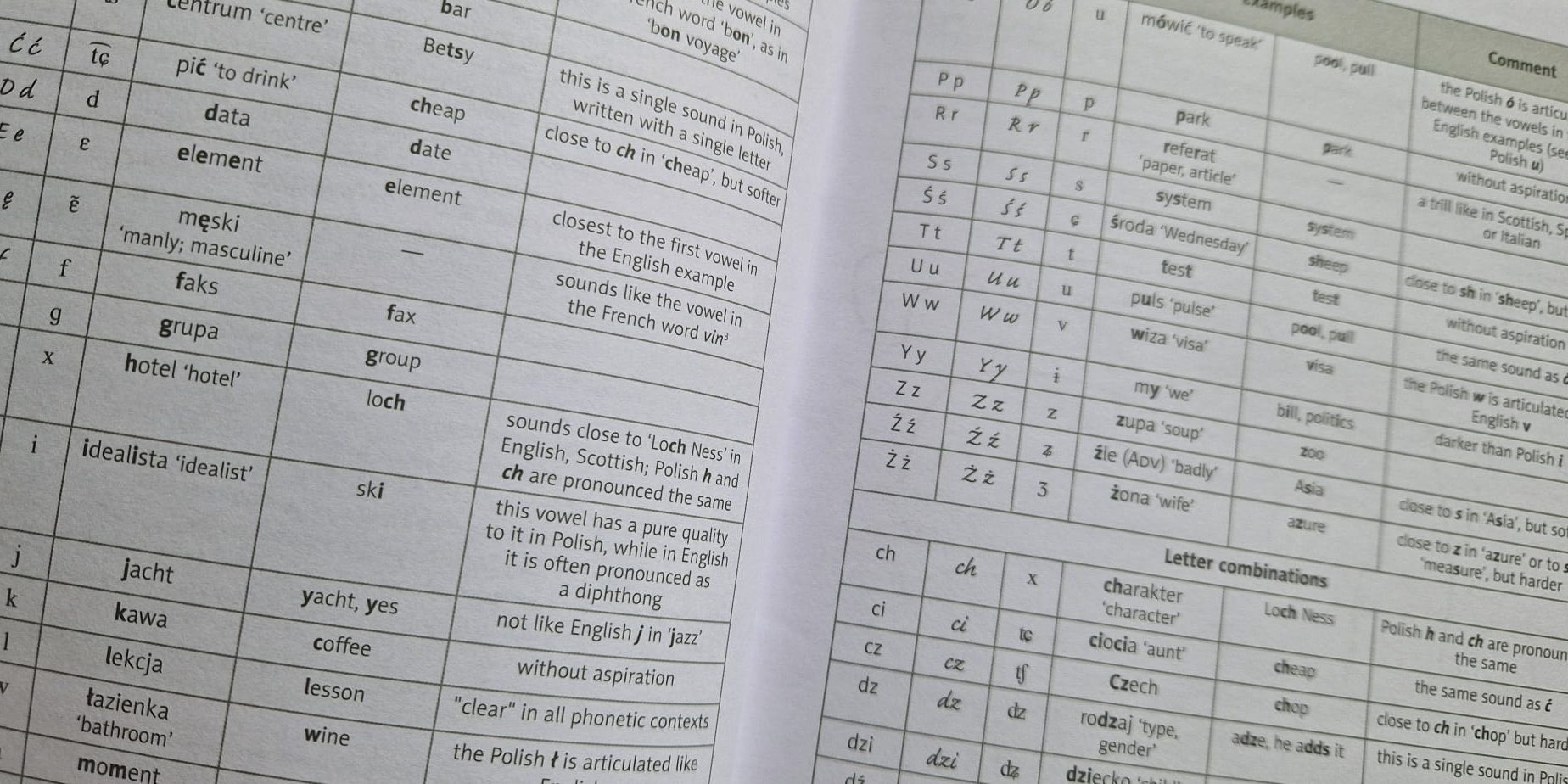
My early steps included understanding Polish’s special features. Every detail helped me become accurate and fluent. A beginner must learn the right pronunciation. This requires knowing the Polish alphabet and its nine unique letters.
- Getting to know the 32-letter alphabet was crucial. Special characters like ć, ł, and ż introduced me to new sounds.
- I explored how Polish verbs change in different tenses: present, past, and future. This showed me the language’s nuance.
- Nouns in Polish adapt based on their role in a sentence. They follow one of seven cases, like nominative or dative.
Consistent practice was key to improving. Using Duolingo daily greatly grew my vocabulary to about 2000 words. A YouTube playlist helped improve my pronunciation with real examples.
As I began forming sentences, Polish’s complexity with seven cases and noun genders was overwhelming. But moving from memorization to interactive learning made it easier. PolishPod101’s audio and video lessons were invaluable.
My guide to polish language skills focused on integrating these parts. Learning to adjust noun endings by gender and number became easier with time. This groundwork was essential for fluency later on.
Looking back, those first months were fundamental to my proficiency. A steady, comprehensive method didn’t just help me learn. It made me appreciate Polish’s intricate but logical structure.
Customizing the Learning Experience: Tailoring the Process to Fit My Style
I started learning Polish and needed a plan that fit my speed. At first, Polish phonetics and grammar confused me. But after finding the right materials and methods, it all started making sense.
This made learning faster and more fun.
Choosing the Right Learning Materials
Finding the best place to learn Polish was key. “Teach Yourself Polish” was a game-changer for me. It helped me grasp the basics and the grammar. This approach built my foundation.
I enjoyed learning through dialogues, focusing on practical use more than memorization. Also, I tried an AI-driven course. It kept me engaged with interactive lessons, thanks to AI technology like Babbel and Mondly.
Integrating Polish into Everyday Life
Just starting wasn’t enough. I had to use Polish daily. Putting sticky notes around my house and using Polish on my phone helped a lot.
These steps made me use Polish naturally. Practicing with AI chatbots also helped (much like an AI agent for outreach does). It was a mistake-free way to learn, boosting my confidence for my time in Poland.
In the end, how you connect with lessons is what matters. I personalized my learning and used tech tools. This made my journey easier and more fulfilling. It showed how adapting the learning process can be a big help.
Learn Polish through Immersion: The Power of Surrounding Yourself with the Language
Learning Polish quickly became easier when I immersed myself fully in it. Living in Poland turns every moment into a learning opportunity. Using language apps while being in Poland showed me how important real talks are in mastering a language.
Using tools like Pimsleur Polish and Glossika made a big difference. Pimsleur improved my pronunciation and essential phrases through conversation-like lessons. Glossika let me practice grammar and vocabulary with spaced repetition, making it stick.
Choosing between full and partial immersion depends on what fits you best. Full immersion means using Polish for everything. It’s intense but effective. Partial immersion is less intense. It lets you use some of your native language, making it great for starters.
- Intensive language camps provide quick learning boosts. They’re great for fast progress.
- Apps like HelloTalk or Tandem help you chat with Polish natives, turning chats into lessons.
- Online courses are flexible, fitting into busy schedules perfectly. They’re good for learning at your own speed.
Here’s a look at how different immersion methods help in language learning:
| Immersion Type | Description | Benefits |
|---|---|---|
| Full Immersion | Use of Polish exclusively in all settings. | Maximizes language exposure, enhances fluency rapidly. |
| Partial Immersion | Mix of Polish and native language use. | Good for beginners, reduces pressure, maintains steady progress. |
| Language Camps | Short, intensive learning periods. | Boosts skills quickly, offers real-life practice. |
My immersion journey didn’t just improve my Polish. It also gave me cultural insight that textbooks couldn’t. Immersion is more than learning. It’s experiencing the culture, seeing new viewpoints, and understanding the world better.
Strategic Practice: How Focused Learning Sessions Accelerated My Progress
I began learning Polish with efficient methods that fine-tuned my study habits. I understood that organized practice was key. To master Polish, I used fast learning techniques that made the most of my study time.
My study plan included brief, targeted sessions throughout the day. Each focused on a different language skill, like grammar or speaking. This method kept my learning active and helped me remember better. For example, I spent mornings doing grammar exercises and nights practicing speaking and watching Polish media.
Timing and Frequency of Study Sessions
Studying Polish well meant spreading out brief, focused sessions all day. These sessions covered everything from grammar to speaking. This was the quickest way to learn while making sure I really remembered what I studied.
Being engaged with Polish all day was crucial. Mornings were for grammar, and evenings for speaking and media. This approach significantly sped up my learning.
Repetition and Active Recall in Language Learning
I improved my Polish fast through regular practice. Consistently seeing the most common words made my vocabulary grow quickly. Active recall moved these words into my long-term memory, readying me for complex conversations.
Weekly recall sessions and talking with friends kept my learning on track. This made my study time both fun and effective.
Learning Polish wasn’t just about speaking. It was about combining methods for a smooth journey. By focusing on quick learning and repetition, I made fast progress. This showed me that with the right approach, fluency is within reach, and quicker than you might think.
Conclusion: Tips and Encouragement for Your Language Learning Journey
I went from speaking only English to being fluent in Polish over the last decade. This proves that mastering Polish is completely doable. Living in Poland, I’ve learned that success comes not just from classes. It also comes from a learning plan that fits you, including understanding Polish’s 32 unique letters.
If you’re just starting and want to know how to make Polish easy, set SMART goals. Start with a language course, which could be at community colleges or through online platforms. These can help find your level. Yet, it’s vital to look beyond just formal education. Immerse yourself in Polish culture through music, podcasts, and Polish food. Online tools like Duolingo, Babbel, and Memrise are great too. Also, sites like Tandem and ConversationExchange give you real-life practice.
Since my learning needs were specific, my path wasn’t the usual one. For those feeling the same, my journey shows it’s possible to succeed. I mixed self-study through PolishPod101 and Clozemaster with real experiences. Remember, over 50 million people speak Polish. Let this motivate you to keep trying. Keep practicing, connect with the community, and use resources smartly. Polish fluency isn’t just a dream, but a journey you’re on.