In a quaint village near Bydgoszcz, I found myself at a table overflowing with the essence of ‘święta Bożego Narodzenia’.
Of course, we’re in Slavic lands, so there’s just insane amounts of food to put into your face.
Everyone suddenly stood up, grabbed thin wafer pieces, spoke quietly to each other, broke off bits, and ate them.
This was my first encounter with Polish Christmas traditions. No one explained what was happening. The wafer, opłatek (oh-pwah-tek), was being passed around. Breaking it felt like joining a secret society with rules nobody bothered to mention.
Polish Christmas differs fundamentally from Western commercial celebrations. Where other countries focus on gift-giving spectacle, Poland centres Christmas around Wigilia, a Christmas Eve dinner that operates according to centuries-old customs most foreigners find bewildering.
Understanding these Polish traditions requires grasping why they persist. Poland’s Christmas customs survived partition, occupation, and communist suppression because they anchor family identity.
They’re not quaint folklore.
They’re cultural DNA.
What Makes Polish Christmas Traditions Different
Polish Christmas revolves around December 24th, not December 25th. Christmas Day becomes recovery time at babcia’s after Wigilia’s intensity.
This inversion confuses foreigners who expect December 25th celebrations. In Poland, Christmas Eve carries all the emotional weight. December 25th exists for sleeping off the previous night’s festivities.
The difference stems from Catholic liturgical tradition, where Christmas begins at sunset on December 24th. Polish people took this literally. Wigilia became the main event.
Wigilia: The Heart of Polish Christmas
Wigilia (pronounced “vee-GEE-lee-ah”) means “vigil” in Latin. The name reflects waiting for Christ’s birth. Polish families gather for this Christmas Eve supper following precise ritual order.
Traditionally, the meal cannot begin until the first star appears in the sky. This star represents the Star of Bethlehem. Families peer through windows, searching for that initial glimmer.
Hay spreads beneath the tablecloth, symbolising Jesus’s manger birth. An empty place at the table waits for unexpected guests or honours absent family members.
These aren’t decorative touches. Each element carries specific meaning rooted in centuries of practice.
The Opłatek Ritual: Breaking Bread, Sharing Wishes
Opłatek — thin, unleavened wafers stamped with religious images — begins every Wigilia dinner. The ritual follows strict protocol.
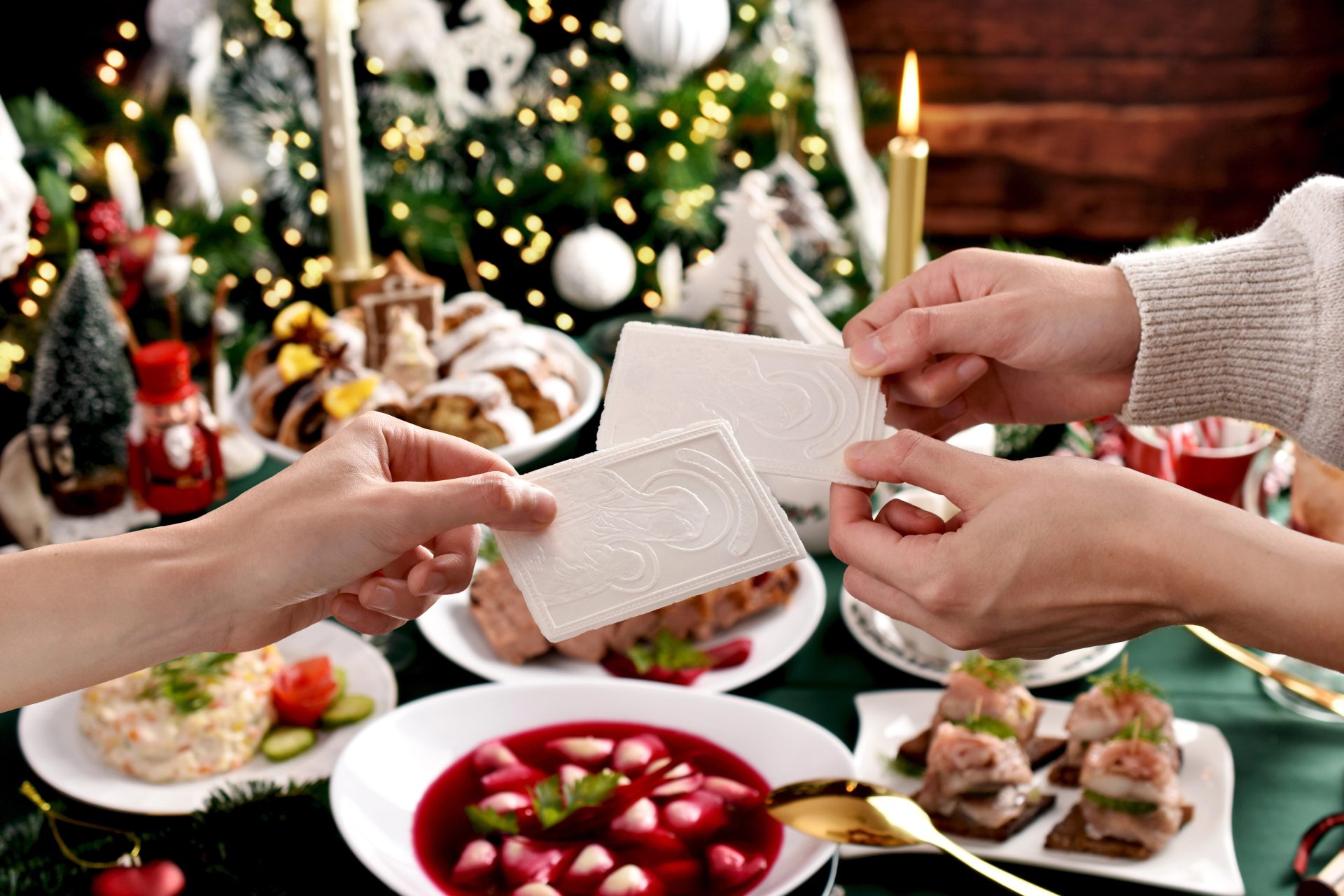
The eldest family member breaks their wafer first. Everyone receives a piece.
Then begins the sharing ceremony:
Each person approaches every other person, breaks off a small piece of their wafer, exchanges it, and offers wishes for the coming year.
This process can take thirty minutes in large families. No one rushes. The ritual demands personal interaction between every participant, eye contact, genuine, heartfelt wishes (even if you don’t know the person), and recognition and appreciation of those wishes.
Foreigners often mistake this for a religious ceremony exclusively. While opłatek has Catholic origins, secular Polish families maintain the tradition. Breaking wafer represents forgiveness, reconciliation, and family unity regardless of religious belief.
Twelve Dishes: The Wigilia Feast Structure
Traditional Wigilia features twelve dishes, representing either the twelve apostles or twelve months. Traditionally, each guest must taste every dish — even a symbolic bite.
The dishes follow Catholic fasting rules: no meat, only fish, vegetables, and grains. This limitation produced remarkable culinary creativity over the centuries.
Essential Wigilia Dishes
Carp dominates most tables, prepared multiple ways:
- Fried carp in breadcrumbs
- Carp in aspic (karp w galarecie)
- “Jewish-style” carp in sweet sauce
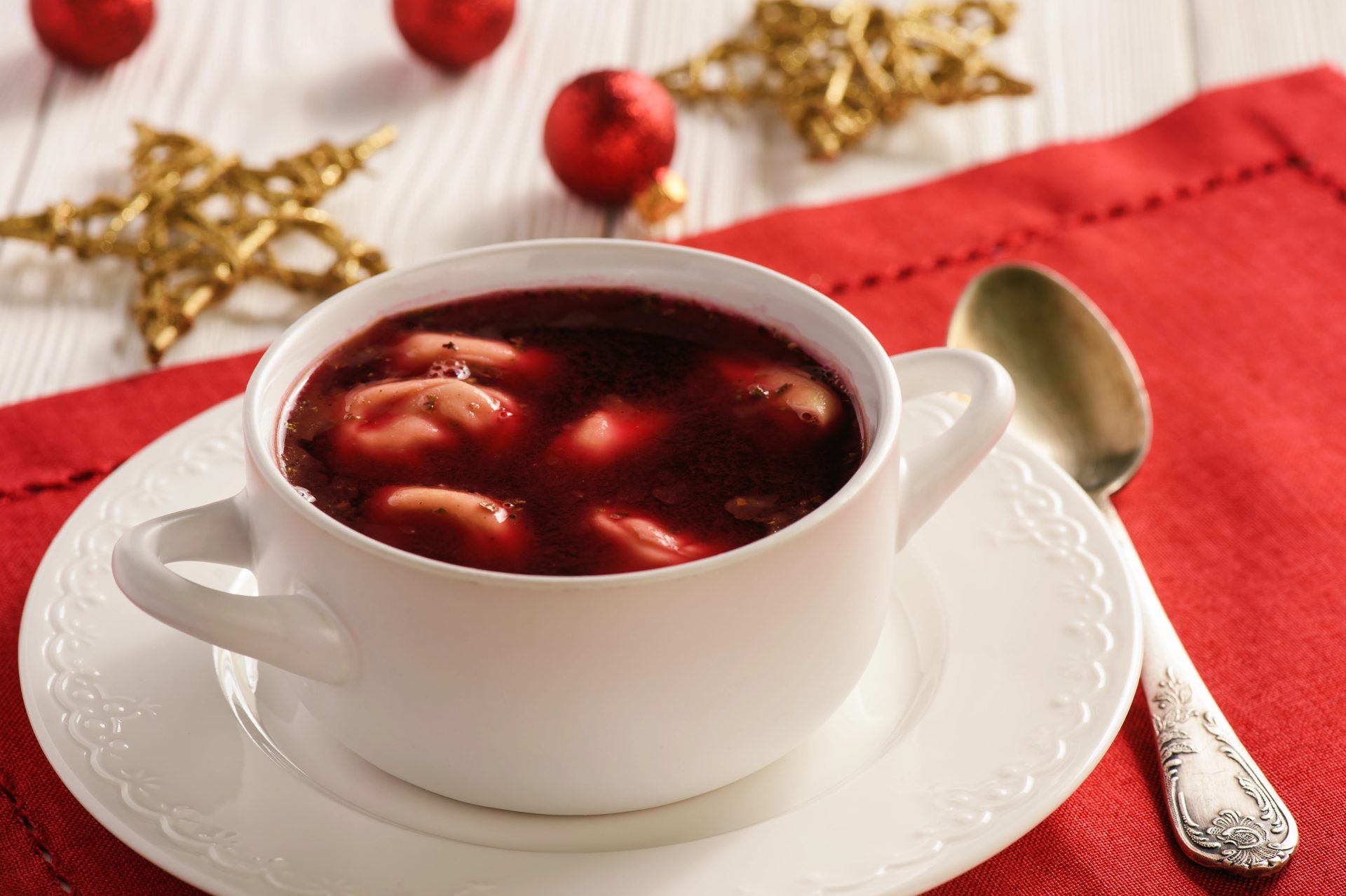
Barszcz czerwony (red beetroot soup) with uszka (small mushroom dumplings) appears on virtually every table.
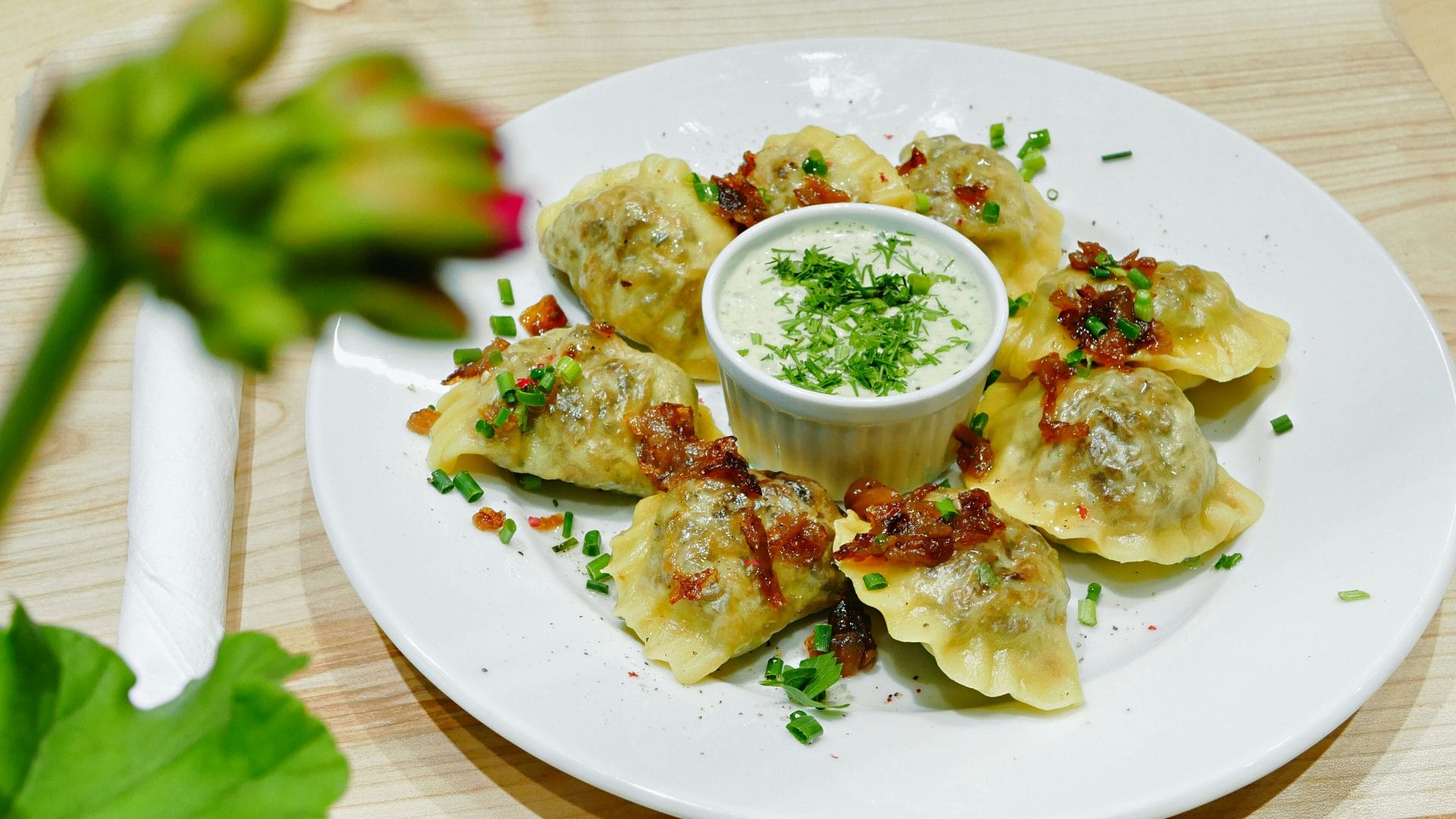
 Pierogi stuffed with cabbage and mushrooms provide the meal’s substantial element.
Kutia — sweet grain pudding with poppy seeds, honey, and nuts — represents prosperity and fertility.
Regional variations exist. Silesian families might include kluski śląskie (Silesian dumplings). Coastal regions feature more fish varieties. Mountain areas emphasise mushroom dishes.
The twelve-dish requirement creates logistical challenges for smaller groups, so many sometimes reduce the number while maintaining symbolic variety.
Of course, it’s a holiday, so there’s usually plenty of Polish candy to be shared, too.
Other foods may include:
- Barszcz with Uszka: A beetroot soup served with small dumplings filled with mushrooms.
- Mushroom Soup: Made from wild forest mushrooms, offering a rich and earthy flavour.
- Fried Carp: A staple fish dish, often breaded and fried to perfection.
- Herring Dishes: Such as herring in oil or sour cream, adding a tangy element to the meal.
- Gołąbki: Cabbage rolls filled with rice and mushrooms.
- Kompot z Suszu: A dried fruit compote, serving as a traditional beverage.
- Makowiec: A poppy seed roll, offering a sweet end to the meal.
- Karp po Żydowsku: Fish prepared in a sweet, gelatinous sauce, known as “Jewish-style” carp.
- Łazanki z Kapustą i Grzybami: Pasta mixed with sauerkraut and mushrooms.
The Polish Christmas Carp Tradition
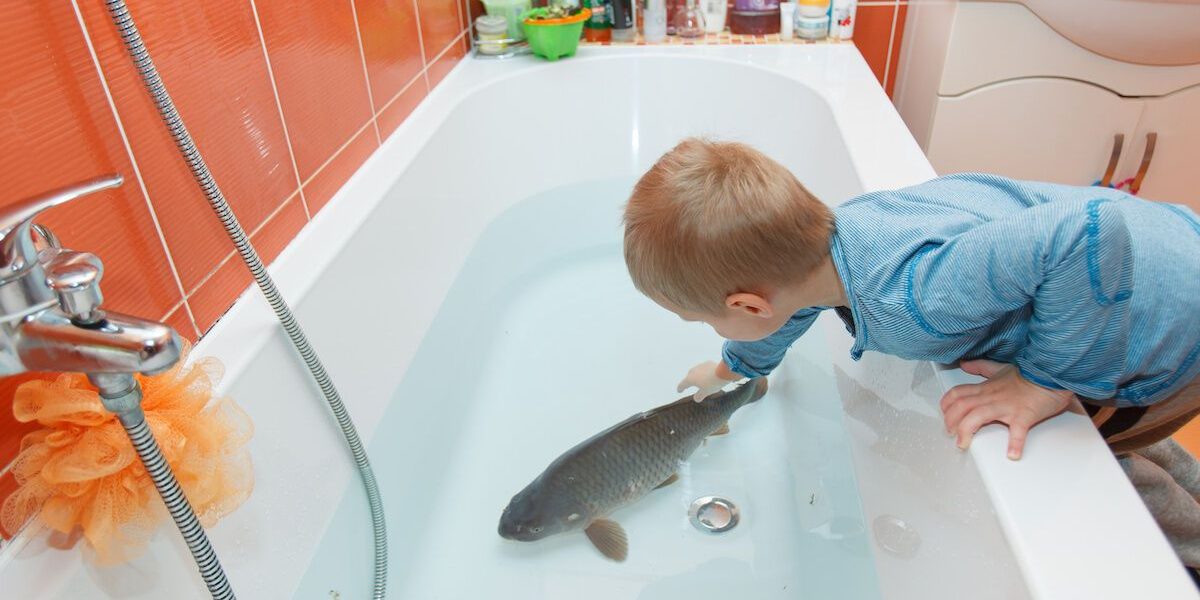
Polish Christmas carp bathtub storage became legendary among foreigners. Live carp swimming in family bathtubs for days before Christmas Eve sounds absurd to outsiders.
The tradition emerged from practical necessity during communist times. Fresh fish appeared sporadically in shops. When carp became available, families bought immediately and kept fish alive until needed.

Bathtubs provided perfect temporary aquariums. Running water, controlled temperature, adequate space — better than any available alternative.
Children often named their temporary pets, creating emotional attachment and yes, many struggled to kill fish they’d watched swimming for days.
Modern refrigeration and reliable fish markets reduced bathtub carp prevalence.
Polish Christmas Tree Customs: Beyond Western Decorations
Polish Christmas trees — choinka — carry different symbolic weight than Western decorations. While glass ornaments appear, traditional decorations dominate.
Natural elements cover branches:
- Fresh apples representing harvest and fertility
- Nuts wrapped in coloured foil
- Homemade cookies and gingerbread
- Straw stars crafted by family members
Spider decorations might surprise foreigners. Polish folklore tells of spiders spinning golden webs around Christmas trees, bringing good fortune. Tinsel represents these magical webs.
Urban families adopted glass ornaments during the 19th century. Rural areas maintained natural decorations longer. Today’s Polish trees often blend both traditions.
Christmas Carols: Kolędy and Their Cultural Power
Polish Christmas carols — kolędy — trace back to the 15th century. These songs carry deeper cultural significance than entertainment.
Traditional kolędy like “Wśród nocnej ciszy” (In the Silence of Night) and “Bóg się rodzi” (God Is Born) remain unchanged across generations. Families sing identical versions their ancestors knew.
Kolędy serve multiple functions:
- Preserving Polish language during occupation periods
- Transmitting religious stories to illiterate populations
- Creating shared cultural experience across social classes
Polish emigrants worldwide sing kolędy to maintain connection with homeland. The melodies trigger immediate cultural recognition.
The Empty Chair: Polish Hospitality Philosophy
Wigilia’s empty chair tradition embodies Polish hospitality concepts foreign visitors rarely encounter elsewhere.
Every table sets one additional place for unexpected guests. This isn’t theoretical courtesy — Polish families genuinely welcome strangers appearing on Christmas Eve.
The practice predates Christianity in Poland. Ancient Slavic customs included honouring ancestors during winter solstice meals. Empty places originally invited deceased family spirits.
Modern interpretation focuses on human hospitality. The empty chair reminds families that someone might need welcome, warmth, and Polish food on Christmas Eve.
This tradition explains why Polish families readily invite foreign colleagues, neighbours, or anyone spending Christmas alone. The empty chair makes inclusion natural, not exceptional.
Midnight Mass and Christmas Day Recovery
Pasterka — Midnight Mass — concludes Christmas Eve for many Polish families. Churches fill with families attending together after Wigilia dinner.
The service creates community gathering beyond family units. Entire neighbourhoods converge, singing kolędy collectively.
Post-Pasterka celebrations often continue at home. Families might drink vodka, play cards, or simply talk until dawn. This explains why Christmas Day traditionally becomes quiet recovery time.

Younger generations sometimes skip church but maintain family gathering aspects. Secular families might substitute other group activities while preserving Wigilia’s core elements.
Modern Adaptations: Home Alone and Cultural Evolution
“Home Alone” somehow became essential Polish Christmas viewing. The film airs annually on Polish television, drawing massive audiences who quote dialogue by memory.
This adoption illustrates how Polish culture absorbs foreign elements while maintaining core traditions. Kevin McCallister’s family chaos resonates with Polish family dynamics. The film’s Christmas setting fits naturally into Polish holiday atmosphere.
Polish families watch “Kevin sam w domu” (Kevin Alone at Home) after Wigilia dinner or on Christmas Day. Multiple generations gather around televisions, creating new shared tradition alongside ancient customs.
Regional Variations Across Poland
Polish Christmas traditions vary significantly by region, reflecting historical influences and local customs.
Silesia emphasises mining community traditions. Families might include coal pieces under tablecloths for prosperity. Kluski śląskie (Silesian potato dumplings) often replace standard pierogi.
Kashubia maintains distinct Slavic customs. Kashubian families might perform ancient winter solstice rituals alongside Christian celebrations.
Mountain regions focus on shepherd traditions. Highlander families create elaborate szopkas (nativity scenes) and perform traditional mountain carols.
Coastal areas feature expanded fish selections beyond standard carp. Baltic herring preparations appear frequently.
These variations demonstrate Polish Christmas’s adaptability while preserving essential elements across all regions.
Why These Traditions Persist
Polish Christmas customs survived because they serve functions beyond religious observance. They create family cohesion, cultural identity, and community connection.
During partition periods, Christmas traditions maintained Polish identity when political expression was forbidden. Families gathered around familiar customs, speaking Polish, singing traditional songs.
Communist authorities tolerated Christmas celebrations because suppressing them would have created massive resistance. Polish families treated Christmas as cultural rather than purely religious expression.
Modern Poland maintains these traditions because they provide stability amid rapid social change. Wigilia creates predictable family gathering when other social structures shift.
Foreign residents often find Polish Christmas overwhelming initially. The ritual complexity, emotional intensity, and time commitment exceed typical holiday expectations. However, families that include foreigners in authentic Wigilia celebrations usually convert them into enthusiastic participants.
Polish Christmas demonstrates how cultural traditions adapt while preserving core meaning. The bathtub carp might disappear, but opłatek sharing continues. Modern families might reduce twelve dishes to eight, but empty chairs remain.
Understanding Polish Christmas requires recognising its function as cultural anchor. These aren’t quaint customs maintained for tourist appeal. They’re living traditions that define Polish family identity across generations.
FAQ
What makes Polish Christmas traditions unique compared to other holiday customs?
Polish Christmas traditions centre on December 24th rather than December 25th, with Wigilia (Christmas Eve dinner) as the main celebration. Unique practices include sharing opłatek wafers, keeping carp in bathtubs, setting empty chairs for unexpected guests, and following twelve-dish meal requirements. These customs blend ancient Slavic traditions with Catholic elements, creating celebrations focused on family unity rather than commercial gift-giving.
How does the Wigilia dinner commence and what does it symbolize?
Wigilia begins when the first star appears in the evening sky, representing the Star of Bethlehem. Before eating, families share opłatek wafers, with each person breaking pieces from others’ wafers while exchanging wishes. Hay spreads beneath the tablecloth symbolising Jesus’s manger birth. The ritual emphasises spiritual preparation, family reconciliation, and anticipation of Christ’s birth.
What is the significance of the opłatek during Christmas celebrations?
Opłatek — thin, unleavened wafers with religious images — represents peace, forgiveness, and unity. The sharing ritual requires every family member to exchange wafer pieces with every other person while offering personal wishes. This tradition, considered Poland’s oldest Christmas custom, creates individual connection between all participants and symbolises breaking bread together in Christian fellowship.
What are the traditional twelve dishes served during Wigilia?
Traditional Wigilia dishes include carp prepared multiple ways, barszcz czerwony (beetroot soup) with uszka dumplings, pierogi with sauerkraut and mushrooms, kutia (sweet grain pudding), and various fish preparations. The twelve dishes represent either the twelve apostles or months of the year. All dishes follow Catholic fasting rules, containing no meat — only fish, vegetables, grains, and dairy products.
Why do Polish families keep carp in bathtubs before Christmas?
The carp bathtub tradition emerged during communist times when fresh fish appeared sporadically in shops. Families bought live carp when available and kept them in bathtubs until Christmas Eve to ensure freshness. Bathtubs provided ideal temporary aquariums with running water and controlled temperature. While less common today due to modern refrigeration, some families maintain this practice as essential Christmas preparation.
What does the empty chair at Wigilia represent?
The empty chair and place setting welcome unexpected guests and honour absent family members. This tradition reflects Polish hospitality philosophy, ensuring no one spends Christmas Eve alone. Originally rooted in pre-Christian Slavic customs honouring ancestors, the modern practice emphasises human welcome and community inclusion, making stranger invitation natural rather than exceptional.
How do Polish Christmas carols (kolędy) differ from other Christmas music?
Polish kolędy date to the 15th century and remain unchanged across generations. These carols served crucial cultural functions during occupation periods, preserving Polish language and transmitting religious stories. Traditional songs like “Wśród nocnej ciszy” and “Bóg się rodzi” create immediate cultural recognition among Poles worldwide, functioning as cultural anchors rather than mere entertainment.
Why has “Home Alone” become part of Polish Christmas tradition?
The film “Home Alone” (Kevin sam w domu) gained popularity in 1990s Poland when television options were limited. The movie’s family chaos and Christmas setting resonated with Polish audiences, becoming annual viewing tradition. Multiple generations now watch together after Wigilia dinner, demonstrating how Polish culture absorbs foreign elements while maintaining core traditions.
Do Polish Christmas traditions vary by region?
Yes, significant regional variations exist across Poland. Silesia emphasises mining traditions and includes kluski śląskie dumplings. Kashubia maintains distinct Slavic customs alongside Christian elements. Mountain regions focus on shepherd traditions with elaborate szopkas (nativity scenes). Coastal areas feature expanded fish selections beyond standard carp. These variations demonstrate adaptability while preserving essential elements.
How do modern Polish families adapt traditional Christmas customs?
Modern Polish families maintain core traditions while adapting practical elements. Many buy prepared fish instead of keeping live carp, reduce twelve dishes to fewer while maintaining variety, and blend religious customs with secular family gathering. Urban families might combine traditional natural tree decorations with modern ornaments. The essential elements — opłatek sharing, empty chairs, family unity — remain unchanged.