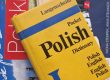
Ten years ago, I started learning the Polish language and I can’t confidently say that I’m fluent.
Speaking, reading, writing, listening – all of it was on the cards as I established my new life in Poland.
I’m a native English speaker, and this was the first time in my adult life that I’d attempt to learn a language.
It seemed as tough as climbing Everest – and just as slow and gruelling. This wasn’t helped because almost every Pole I spoke to told me how hard (and unimportant) Polish is.
But then I started making an effort and seeing progress. I started to go from ordering a coffee without making mistakes, to speaking with work colleagues for 10 minutes and they understood everything (even though I wasn’t speaking perfectly)
Yes, learning Polish is hard. But it’s an exciting challenge, too.
When I first tried learning Polish, the teaching methods felt outdated for me. They relied heavily on memorization and repetition. I struggled at first. Eventually, I got better by practicing and learning from mistakes. I tackled the tricky pronunciation, seven cases, and unique vocabulary as challenges to overcome.
Polish is hard but not impossible. The US Foreign Service Institute ranks it as a Category 4 language.
This means it might take 1100 hours to master it. But these hours are just numbers, and hours that I’d otherwise spend watching TV, reading or some other form of entertainment.
They don’t measure your determination or the creative ways you might learn.
I can speak Polish confidently today by finding the right approach and resources.
The Truth About Language Difficulty and Personal Perspective
I’ve spent ten years learning Polish from English. I’ve found that how difficult is it to learn Polish depends on the person and their first language.
What helped me was that at the same time I started learning Polish (while living in Poland), I also started teaching English here. Not only was I learning Polish, but I was also learning how to teach my mother tongue to someone else. My brain was absorbing a lot of knowledge about languages and learning.
That’s what made me realise that learning a language isn’t always hard, but it was hard for me as it was so different from English.
Scary polish Grammar
Amongst polyglots (people who speak multiple languages), Polish gets a reputation as being hard because of the insane number of cases, 3 genders and everything changing form depending on whether it’s used negatively, in terms of location and so on.
And yes, that’s true.

It has seven noun cases, five verb tenses, and special rules for it’s 3 genders.
And then there are exceptions to those rules!
These might seem tough at first. With the right help and effort, and the right amount of commitment and dedication, anyone can learn them, though.
Polish has features that seem hard compared to other languages. Unlike English’s sixteen verb tenses, Polish only has five. This makes learning verbs in Polish simpler. Also, while Mandarin doesn’t use verb tenses or gender, Polish does. But, learning how to pronounce Polish gets easier once you know the basic rules. Here’s how Polish compares with English and Mandarin:
| Feature | Polish | English | Mandarin |
|---|---|---|---|
| Verb Tenses | 5 | 16 | N/A |
| Gender Distinctions | 3, up to 5 | None | None |
| Case System | 7 cases | N/A | N/A |
| Phonetic Consistency | High | Low | High |
Culture affects learning too. There’s a big difference between Slavic and English-speaking cultures. This changes how people talk and use the language informally. Knowing these details helps grasp how difficult is Polish to learn.

When speaking to people that you’ve not met before, it’s pretty common to use pan/pani, which in English would be the equivalent to sir or madam, regardless of the situation. And then when you start to use this formal way of talking, you need to use the case that’s entirely dedicated to speaking formally.
The challenge in learning a language is more about the experience rather than the language’s complexity.
Understanding the Polish Language’s Reputation for Difficulty
Why do people find Polish hard to learn?
I’ve discovered it isn’t easy due to both personal experiences and its complex structure. Throw in the insane pronunciation of the Polish alphabet and it’s easy to see how many foreigners struggle to learn Polish.
Why is learning Polish tough?
Because it has many differences from English, both in language and culture. It suggests that learners need a lot of time, similar to Arabic or Japanese. What’s makes Polish easier than those languages is that it’s still based on a Latin alphabet, and you don’t need to memorise a new one.

Many of my friends from Ukraine and Belarus have told me that the fact that Polish (and Czech) are Slavic-based languages that use Latin are what adds to the complexities. It sounds like SZ (sh in English) is spread out over two characters, making words longer and more ‘intimating’ than necessary.
But the difficulty varies from one person to another. It depends on your native language, study methods, and how you learn best. I improved by using daily, practical language rather than traditional study methods.
Unique Challenges Presented by Polish Pronunciation and Grammar
What makes Polish grammar hard? Unlike English, Polish has seven grammatical cases. This means nouns change form based on their role in a sentence. This, along with challenging pronunciation, like consonant clusters and unique sounds, makes it tough.
| Feature | Polish | English |
|---|---|---|
| Grammar Cases | Seven (e.g., nominative, accusative) | Primarily one (subjective) |
| Genders | Three in singular, two in plural | None |
| Tenses | Three (past, present, future) | Sixteen (e.g., present simple, present continuous) |
| Pronunciation | Phonetic, complex clusters | Non-phonetic, simpler phonetics |
| Articles | None | Definite (the) and indefinite (a, an) |
Starting Polish might feel overwhelming because of its complexity.
However, understanding its details can make it intriguing. What was once the hardest part of learning Polish is now what I love most about it – it’s like solving a fascinating puzzle that I now use daily!
Is Polish Hard to Learn: Common Misconceptions
Many believe Polish is hard to master due to its reputation, but this view overlooks some helpful features.
First, Polish pronunciation matches its spelling, it’s very phonetic. This makes learning how to say words simpler compared to English.

So, could Polish be easier to learn than English? In some ways, yes.
Polish verbs are simpler than English ones, having fewer tenses. Plus, many Polish words share Latin roots with English and Romance languages. This makes learning new words easier.
As an example, banan is banana. Seler is celery. They’re all Latin-based.
As another example, Ministerstwo is ministry – an important word if you want to get your residence permit!
Polish sentences are also flexible and don’t rely heavily on word order. This can make sentence building more natural for beginners but also make listening more difficult, as you’re more likely to understand the words and need a moment to piece them together.
A feature/benefit analysis:
| Feature | Benefit |
|---|---|
| Phonetic spelling | Simplifies pronunciation |
| Fewer verb tenses | Makes verb conjugation easier |
| Latin-influenced vocabulary | Facilitates vocabulary learning |
| Flexible sentence structure | Reduces complexity in sentence formation |
While Polish has tough parts like the case system, acknowledging the easier aspects is crucial. Polish isn’t just hard; it has elements that aid learning.
Strategic Learning Approaches for Tackling the Polish Language
I’ve discovered effective strategies that simplify learning Polish. These methods help learners find the process easier and fun.
- Don’t pressure yourself: You’re learning Polish as a beginner. Treat yourself as one and don’t turn it into a chore – it should be an exciting challenge!
- Chunk Learning: Breaking the language into manageable phrases helps. This is great for everyday talking.
- Repeated Exposure: Regularly hearing and speaking Polish increases comfort. Even short daily interactions aid in mastering the language. If you don’t live in Polska, watch Polish movies with English subtitles.
- Personalized Learning: Use phrases and words that matter to you. This makes learning more relevant. It lets new vocabulary fit into your chats smoothly.
- Goal setting: Set achievable goals that are based on time. It might be getting your B1 language certificate, it might be confidently talking to your in-laws about your last holiday. Have a goal or target.
Duolingo & other apps
I used Duolingo and didn’t like it.
It covers about 2000 words and basic grammar, but it doesn’t explain the rules, there’s no explanation of ‘why’ it’s like that.
I found another app called Clozemaster. It’s similar, but it uses a lot more phrases and helps you learn in context.
Check out my article on learning Polish for more examples of how to learn.
Personal Anecdotes: Journey to Polish Fluency Against the Odds
Learning Polish was a big challenge for me. I’ve never studied for anything like I studied for my B1 language exam, and I’d go so far as to say moving to Poland was easier than studying (and passing) the B1 exam.
Especially because I didn’t learn well in ways that Polish was most commonly taught.
Overcoming Incompatibility with Traditional Teaching Methods
I found out early that Polish was tough in regular classes or by regular teachers.
I would say something incorrectly, and the teacher would say to me ‘no no, kogo, czego, dopełniacz’ and I’d have absolutely no idea what that meant.
Jestem Phil, ale jestem z Philem
What?!
I learn by making mistakes and being corrected. This gave me the confidence to speak and make mistakes, it gave me the ability to get by, but my skills were (and still are) far from water tight.
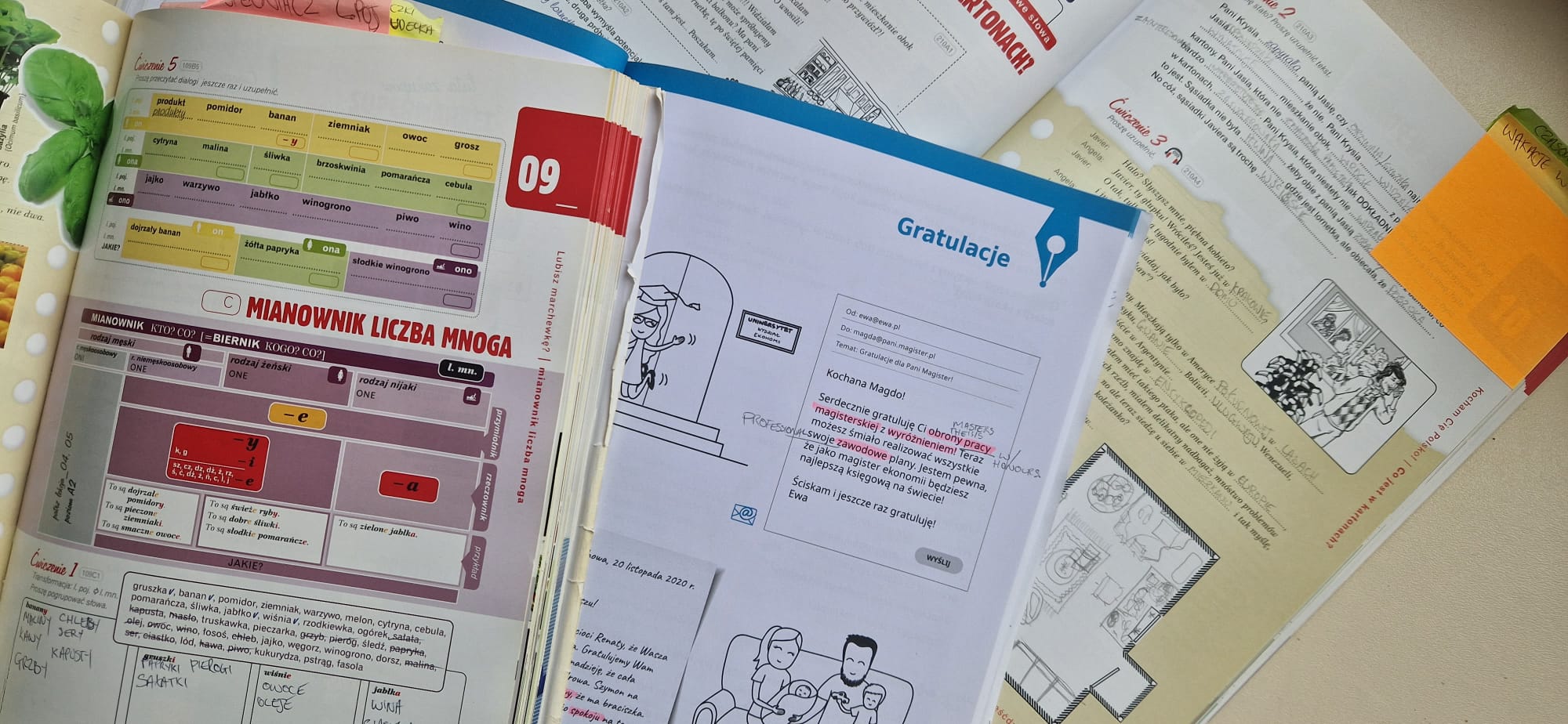
This encouraged me to try new, immersive ways of learning.
I found a teacher through a website called iTalki. Magda was new to teaching Polish and was keen to try new ways to teach Polish, opposed to how she learned to teach. That worked well for me.
Here’s the problem I had with ‘traditional’ learning methods:
That word in the above sentence, dopełniacz – it’s a case, and so when using this case, I know I need to modify words a specific way. I know dopełniacz as the negative case – because every time we use it, it’s usually in a negative way.
- Mam czas (I have time)
- Nie mam czasu (I don’t have time).
I know that ‘czas’ (time) is a masculine word, and that when I use it in a negative way (I don’t have it), I need to add a U on the end.
I need to add a different letter at the end of feminine words,
- Mam herbatę (I have tea – a different case again because when we use possessive [I have], we need to use the case mianownik)
- Nie mam herbaty ( I don’t have tea)
And a different one again for neutral words.
- Mam piwo (I have a beer)
- Nie mam piwa (I don’t have a beer)
It sounds like a lot of work (and it is) but through trial, error, commitment and experimentation, I found a way that works for me and really helped me learn Polish.
Embracing Polish Culture as a Means to Enhance Learning
Understanding Polish culture took my language skills to a new level. At first, Polish isn’t easy. But getting into the culture, like enjoying local food and festivals, improved my vocabulary and understanding.
Cultural immersion was key. It was about living the language, which helped me become fluent more than any book could.
There are a few different reactions when I speak Polish to Polish people. If I’m not p.e.r.f.e.c.t, they’ll correct me or switch to English. But most of the time, people understand and go along accordingly, and will even complement me!
There’s no smile quite like a Pole who’s impressed that you’re speaking Polish!
Conclusion
English speakers often master their language by 12. But, Polish natives usually achieve fluency after 16. This is likely due to the complex grammar of Polish. Polish has three genders and seven cases. It also features sounds and letters unfamiliar to English speakers. Yet, is it really hard to learn Polish, or do we find it tough because it’s so different from English?
Learning Polish was unique for me. I couldn’t learn it in the usual way. But I still found a path to success. Can you learn Polish? Yes, you can. Polish has a seven-case system, which might seem a lot. However, Finnish or Hungarian have over 15 cases. Polish has simpler past tenses than Romance languages and less pronunciation variation. What matters most is your dedication and immersion in the language.
So, is Polish easy to learn? It’s not exactly ‘easy’ because of its number system and complex grammar. However, mastering it is definitely possible. Engaging with Polish culture and using modern learning tools can make a big difference. I’ve managed to learn Polish well. Accepting its unique features helps in learning and opens up a whole new cultural perspective. Approach it with an open mind. The challenge might be big, but the rewards are significant.