Polish traditional clothing reveals more about regional identity than most foreigners expect. These aren’t museum pieces or tourist costumes — they’re visual records of how different parts of Poland developed distinct cultural responses to geography, history, and social pressure.
Each regional costume tells a specific story. The black embroidery of Mazowieckie reflects different influences than the vibrant stripes of Łowicz. Understanding these differences explains why Poland resists simple cultural generalisation, even today.
This examination explores how traditional Polish dress developed across regions, why certain elements became symbols of resistance or status, and what these patterns reveal about Polish cultural logic that foreigners often miss.
Why Regional Polish Costumes Matter
Traditional clothing in Poland functions differently than in many European countries. Rather than representing a unified national identity, Polish folk costumes demonstrate regional autonomy within shared cultural frameworks.
This reflects Poland’s historical experience of partition and occupation. When political unity was impossible, cultural distinctiveness became a form of resistance. Regional dress preserved local identity while maintaining broader Polish connections.
The evolution of Polish folk costumes over centuries mirrors how different areas adapted to varying pressures — economic, political, and cultural. Coastal Pomerania developed different solutions than mountainous Podhale or agricultural Wielkopolska.
These distinctions persist in modern Polish regional pride. Understanding traditional dress patterns helps explain contemporary Polish attitudes toward centralisation, local authority, and cultural preservation.
Warsaw & Mazowieckie: The Wilanów Tradition
The Wilanów costume from the Mazowieckie region demonstrates how Polish traditional dress absorbed aristocratic influences while maintaining peasant practicality.
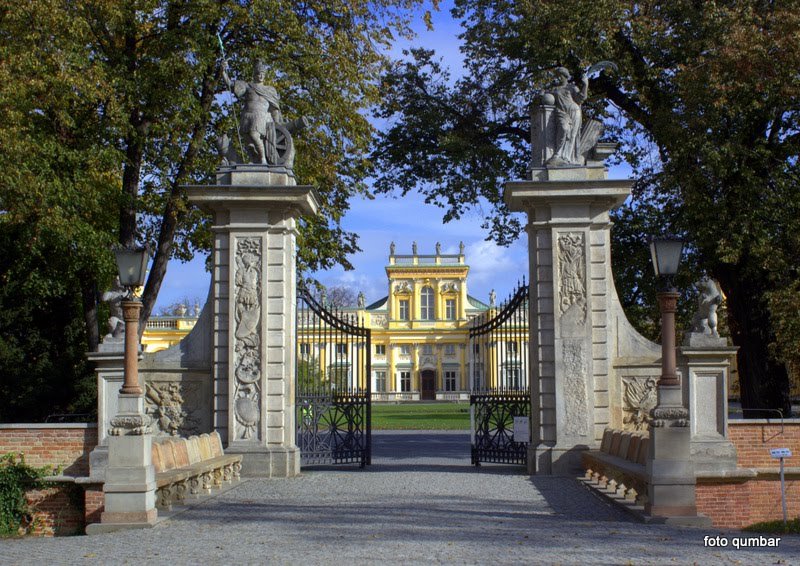
Popular belief connects this costume to Jan III Sobieski’s palace decorations, though the actual relationship is unclear. What matters is how this story reveals Polish attitudes toward status and authenticity.
The costume features distinctive black embroidery on white linen sleeves — a pattern that modern designers frequently reference. This demonstrates how traditional Polish clothing continues influencing contemporary fashion, unlike purely historical artifacts.
 Source
Women’s Mazowieckie attire included ankle-length skirts with shorter aprons in white, blue, green, or yellow. Marital status determined hairstyle: unmarried women braided hair into crown arrangements, while married women wore white embroidered linen head coverings.
Men completed their outfits with tall hats and felt caps. The sukmana — a peasant coat in navy blue or dark green — served as the practical outer layer.
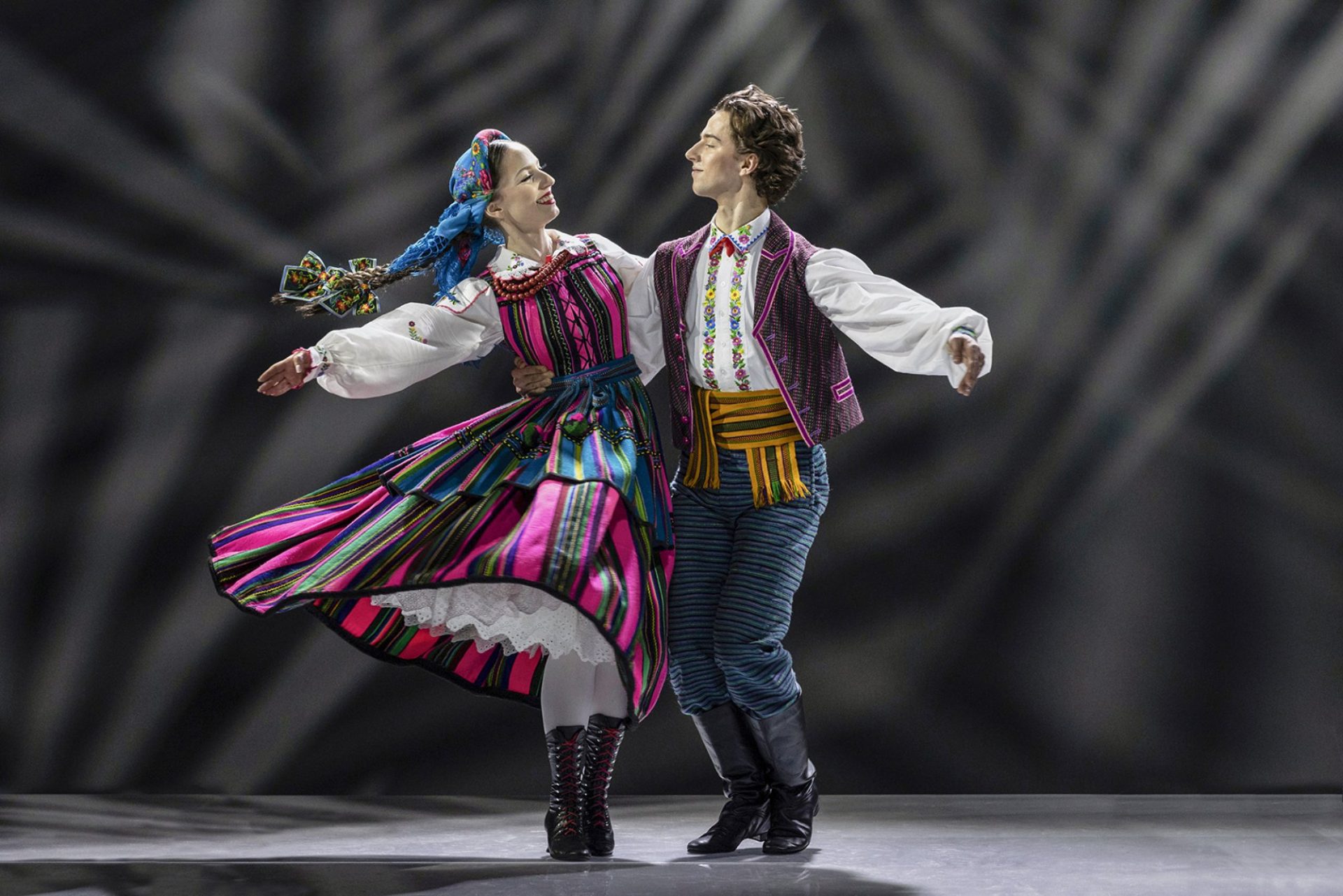
This style persisted along the Vistula River until the 19th century, covering areas from Wilanów to Piaseczno. Its longevity demonstrates how traditional Polish clothing adapted to changing times while maintaining core design elements.
Silesia: Cultural Fusion in Fabric
Silesian traditional clothing reflects the region’s complex history of German, Dutch, and Polish cultural mixing. This isn’t accidental blending — it’s deliberate adaptation to multiple cultural pressures.
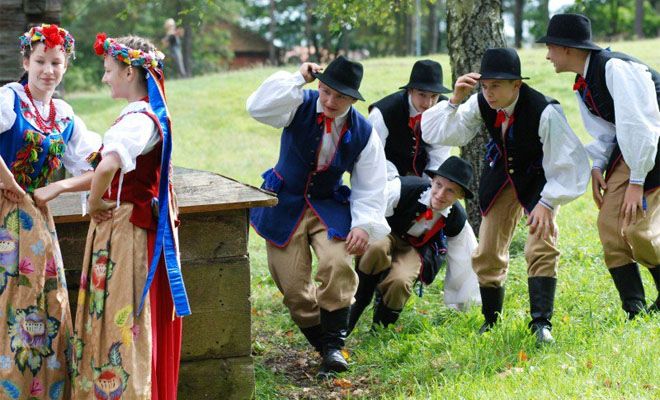
Upper Silesia developed elegant costumes featuring long skirts with floral motifs, fitted bodices, and decorative aprons. Headdresses ranged from lace caps to floral wreaths, emphasising craftsmanship and attention to detail.
Lower Silesia combined Polish and German elements more explicitly. Skirts displayed complex embroidery while blouses featured fine lacework. Colourful scarves or shawls provided practical warmth and visual contrast.
These costumes demonstrate how border regions develop distinct cultural solutions. Rather than choosing one influence over others, Silesian dress synthesised multiple traditions into something uniquely regional.
This pattern explains broader Polish attitudes toward cultural borrowing and adaptation. Poland has historically absorbed foreign influences while maintaining distinct identity — a process visible in traditional clothing design.
Góralskie & Podhale: Highland Identity
Polish highlander clothing from the Podhale region represents one of the most recognisable traditional Polish dress styles. Its distinctiveness comes from geographic isolation and pastoral lifestyle requirements.
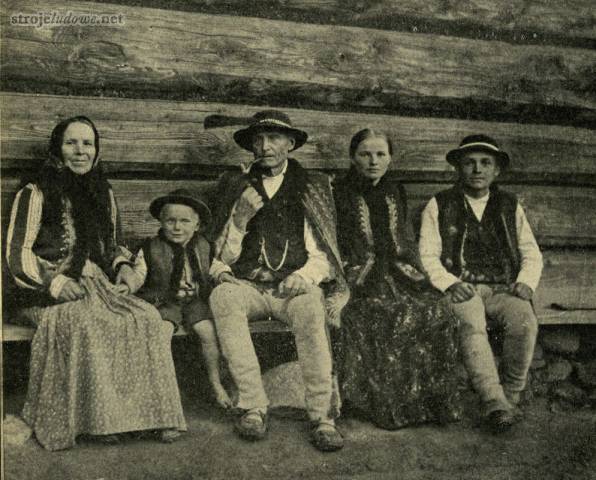
Women’s Highland Attire
Women’s traditional highlander clothing evolved significantly during the 19th and 20th centuries, incorporating fashion influences while maintaining core elements. The basic outfit includes white cotton blouses with white thread embroidery and woollen skirts featuring colourful floral patterns.
The gorset — a corset-style vest — displays plant motifs like dziewięćsił (carline thistle) or szarotka (edelweiss). Front lacing uses ribbons matching the outfit’s colour scheme. Authentic coral necklaces and traditional leather kierpce shoes complete the ensemble.
Married women add tybet shawls over their shoulders. Cold weather requires fur vests (serdaki) or short brown sheepskin coats with embroidery and karakul sheep fur trim.
Men’s Highland Attire
Men’s góralskie clothing belongs to the broader Carpathian pastoral tradition and has changed less than women’s versions. Core elements include white woollen trousers (portki) that narrow at the bottom with distinctive side slits for cold weather fastening.

Colourful parzenice (ornamental patterns) decorate trouser sides. White or grey linen shirts fasten at the chest with pins made from brass, silver, or gold — indicating the wearer’s economic status. Leather belts (opasek) feature embossed patterns and metal buckles.
Footwear includes traditional kierpce (leather shoes) or woollen kapce boots for winter. The outer cucha coat comes in white or black wool, with white versions displaying rich embroidery.
Men wear distinctive black felt hats decorated with white shells and often eagle feathers. This headwear has become an international symbol of Polish mountain culture.

Highland clothing functions as regional identity marker beyond mere tradition. It represents mountain independence, pastoral lifestyle, and resistance to outside authority — themes that resonate throughout Polish cultural attitudes.
Kraków: Rebellions & National Symbols
Kraków traditional dress gained prominence through political rebellion rather than organic cultural development. This transformation reveals how Polish national costume often carries political meaning that foreigners miss.

Tadeusz Kościuszko popularised Kraków peasant dress during the 1794 Uprising by wearing it as disguise from Russian spies. His public pledge of loyalty in Kraków’s market square, dressed in a white sukmana, transformed regional costume into national symbol.
Kościuszko’s choice wasn’t random. He wanted to honour the kosynierzy — peasant volunteers who helped win the Battle of Racławice. By adopting their dress, he elevated peasant culture to patriotic symbol.
This political adoption spread Kraków costume elements throughout Poland. The sukmana coat and rogatywka caps became standard in 19th-century insurgent uniforms, linking traditional dress to resistance movements.

Women’s Kraków costume also gained political significance through the Młoda Polska (Young Poland) movement. Kraków intelligentsia promoted specific elements: peacock feathers in hats, white aprons, embroidered silk corsets, and red beaded necklaces.
This demonstrates how Polish traditional clothing functions as political statement, not just cultural expression. Understanding this context explains why certain regional costumes carry more symbolic weight than others in contemporary Poland.
Wielkopolska: Regional Diversity in Greater Poland
Wielkopolska (Greater Poland) showcases the most diverse traditional clothing styles within a single region. This diversity reflects the area’s role as early Polish political centre and cultural crossroads.

Biskupizna sub-region features ornate headdresses with vibrant ribbons and detailed stitchwork. These aren’t merely decorative — they signal social status, marital state, and family connections within local communities.

Szamotuły Traditional Costumes
Szamotuły area developed particularly elaborate women’s bodices featuring intricate embroidery patterns. These garments required significant skill and time to create, making them indicators of family prosperity and artisan connections.
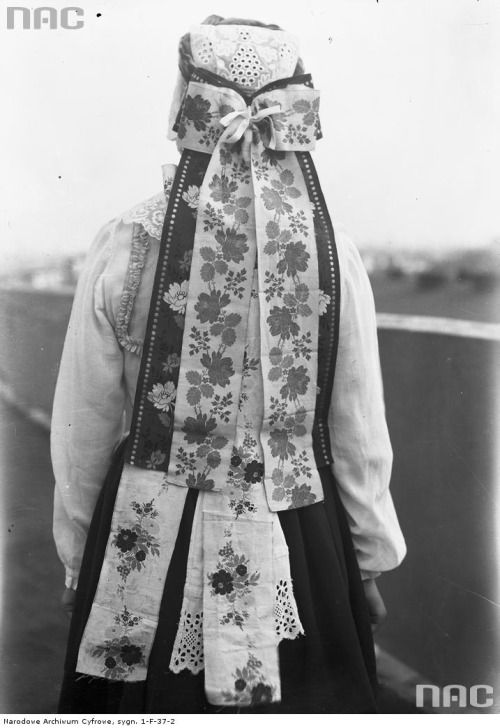
Floral motifs and vivid colours characterise Szamotuły costumes. These design choices reflect local aesthetic preferences and available materials, demonstrating how traditional Polish clothing adapted to regional resources and trade connections.
Wielkopolska’s costume diversity illustrates broader Polish regional autonomy. Rather than imposing uniform standards, different areas developed distinct solutions while maintaining recognisable Polish elements.
Łowicz
Polish folk clothing, especially from the region around Łowicz, stands out as one of the most eye-catching and elegant traditional attires in Poland.

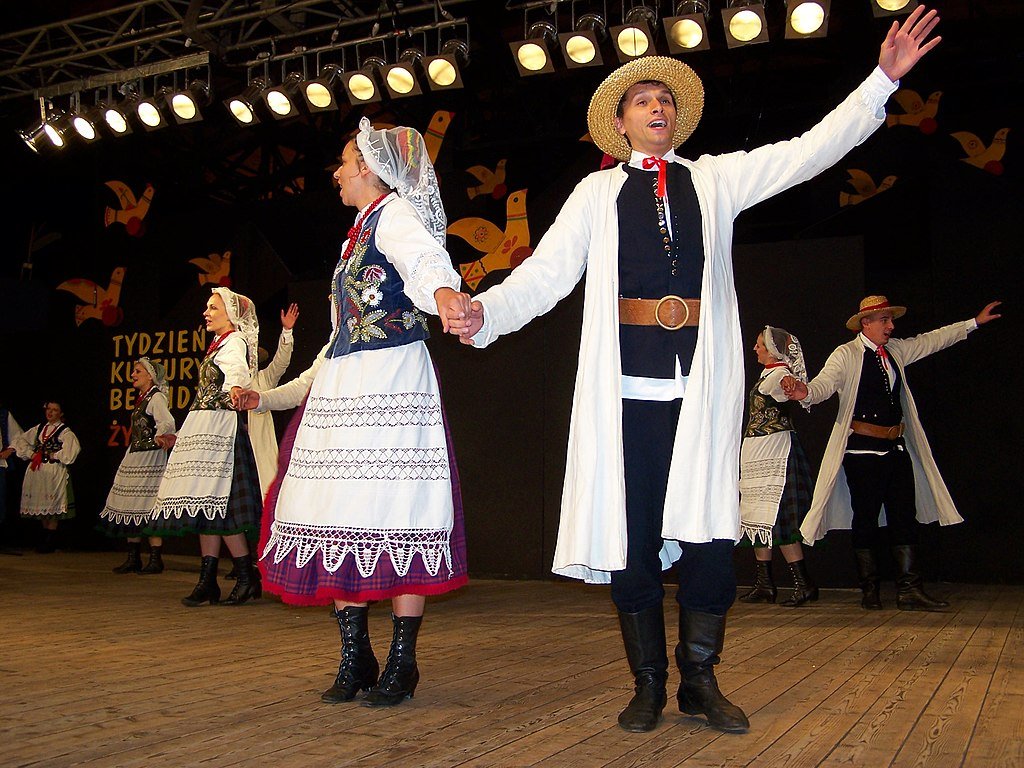
Celebrated for its vibrancy and glamour, this folk dress remains a highlight during national festivities and holidays. Over the years, while it has seen various transformations, its signature feature – the vividly coloured stripes – continues to be its defining trait. These stripes embellish almost every part of the attire, from the women’s skirts and dresses to the men’s trousers.
In the women’s folk dress, these stripes add a distinctive flair to the heavy woollen garments, aprons, corsets, and caftans. The skirts, typically reaching the ankles, are often paired with aprons that are slightly shorter, showcasing a palette of whites, blues, greens, and yellows.

Hairstyles involve braids interwoven with pastel-coloured silk ribbons and accented with beaded necklaces. Unmarried women often style their braids into a crown, whereas married women prefer a white, embroidered linen coif headscarf. For men, the fashion includes tall top hats and felt hats, lending an air of distinction to their ensemble.
An integral part of this traditional ensemble is the sukmana, a coat usually worn by peasants, predominantly in shades of white, navy blue or dark green.
Pomeranian Traditional Clothing
In Pomerania, the folk costumes stand out with their detailed stitchwork and vivid hues, mirroring the coastal environment’s vibrancy. Each sub-region within Pomerania boasts its distinct folk costume style, with Jamno and Kaszubia being particularly noteworthy for their artisanal flair.

In Jamno, the traditional attire is a feast for the eyes. Women’s costumes feature skirts bursting with color, paired with blouses that showcase meticulous sewing. The “wianek,” an elaborate headpiece, adds a refined touch, enhancing the outfit’s elegance with its intricate design.

Kaszubian clothing, a distinctive and colorful part of Polish cultural heritage, is deeply rooted in the traditions of the Pomeranian region. This traditional attire, known for its vibrant colors and intricate designs, reflects the unique identity of the Kaszubian people.
Men’s Kaszubian clothing typically includes boots with high uppers (in Kaszubian, “skòrznie”), into which white woolen trousers (“bùksë”) are tucked. The ensemble is completed with a white shirt, tied at the neck with a red ribbon, and often layered with a sleeveless or sleeved vest (“liwk”). Over this, a coat (“sukmana”) adorned with fine needlework in navy, black, or brown, lined with red fabric, is worn. Headwear varies from a black felt hat to a fur cap (“mùcã”) in winter.
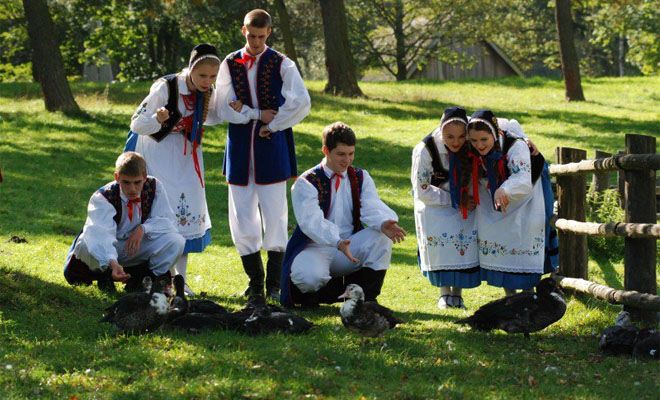
Women’s attire for daily work includes headscarves and short-sleeved blouses, sometimes adorned with a red ribbon, along with multicolored skirts and wooden clogs. At home, women wear caps made of two parts: a base and a hanging section, often wrapped with a headscarf. Their festive attire doesn’t differ much from their work clothes, except for the addition of woolen, fringed brown shawls over the shoulders.
The Kaszubian costume’s color palette varies by region: northern areas favor blue, while central and southern Kaszubia prefer green, brown, and yellow. These regional variations add to the rich tapestry of Kaszubian cultural expression.
Historical Figures – Influence on Polish Fashion
historical figures have left an indelible mark on the evolution of traditional costumes. Their influence has shaped the styles, designs, and cultural resonance of these garments, making them more than just clothing, but rather a narrative of Poland’s past.
King Casimir the Great, who ruled in the 14th century, is a prime example. His era was one of artistic flourishing and economic growth, which naturally extended to the realm of fashion.
Casimir’s penchant for luxury and elegance is evident in the traditional costumes of the time, which feature intricate stitchwork and the use of fine fabrics. This period’s attire reflects a blend of opulence and artistic expression, a testament to Casimir’s impact on Polish sartorial history.
Equally influential was Queen Jadwiga of Poland, whose reign brought a distinct sense of regality and sophistication to Polish fashion.
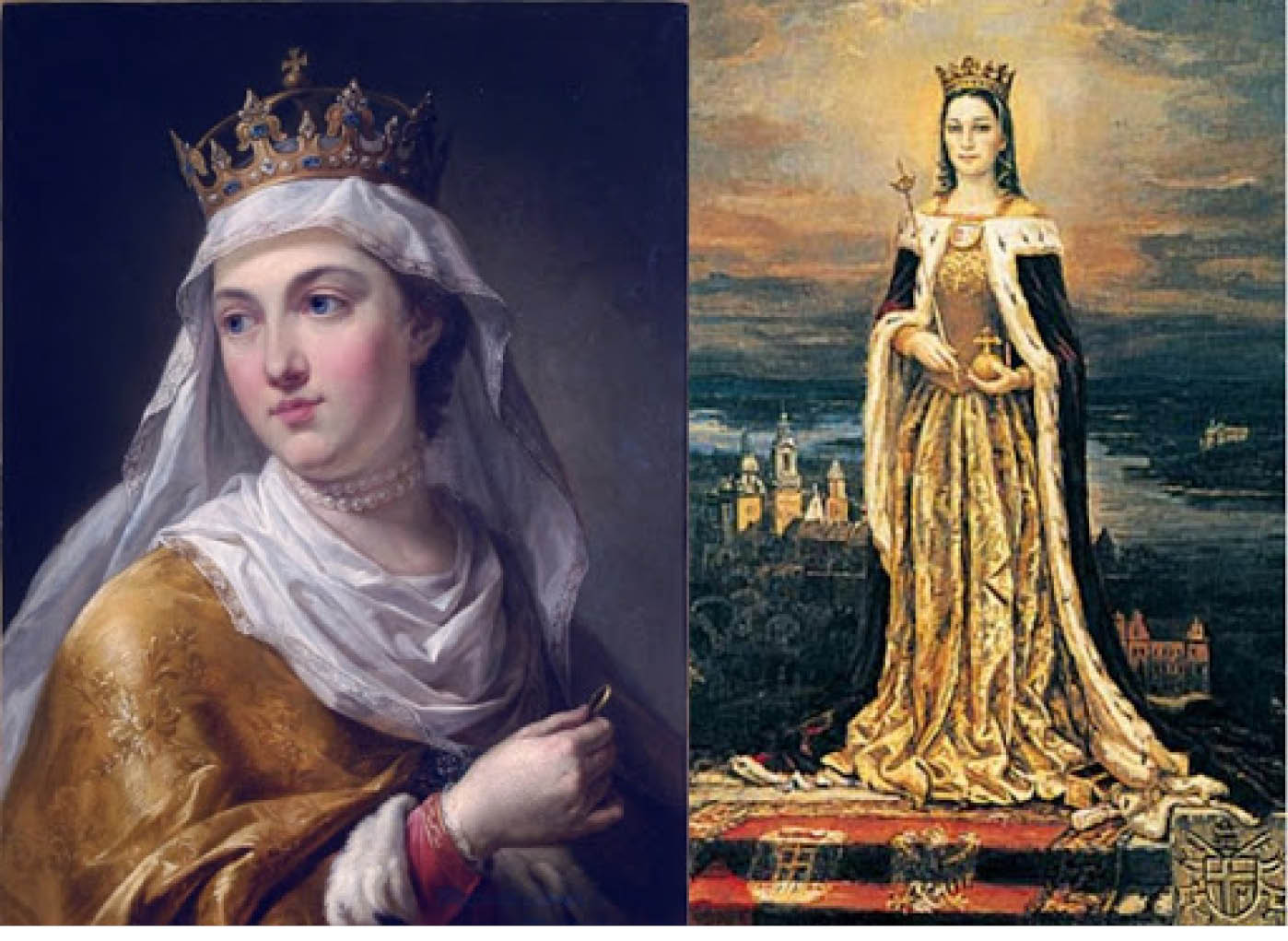
Known for her refined taste, Hedwig’s influence is particularly visible in the elaborate headdresses and ornate designs of traditional Polish costumes. These elements of style, echoing her elegance, continue to inspire modern designers and artisans.
Each traditional Polish costume, enriched by these historical influences, narrates a unique story, embodying the cultural identity of its region. The legacy of figures like Casimir and Hedwig is woven into the very fabric of these garments:
- Casimir the Great’s era brought intricate embroidery and the use of luxurious fabrics to the forefront.
- Jadwiga of Poland’s reign is mirrored in the elaborate headdresses and ornate designs that characterize traditional Polish attire.
By examining the costumes linked to these historical figures, we gain insight into the rich history and cultural heritage. These garments are not just a visual feast; they are a celebration of the artistry and craftsmanship passed down through generations. Embracing traditional Polish fashion is to honor the legacy of these influential figures, keeping their stories and contributions alive through the enduring beauty of clothing.
Conclusion
Polish folklore and traditional fabrics, much like the celebrated Polish vodka, play a pivotal role in the national costume, a vivid reflection of Poland’s diverse regions and rich rural culture. Each costume, with its unique needlecraft and vibrant hues, narrates the distinct identity of its region.
Our overview of the folk costumes has taken us through Poland’s varied landscapes, from Silesia’s cultural fusion to Wielkopolska’s diverse styles. We’ve also discovered the lesser-known yet equally captivating attire of regions like Lubusz, Kuyavia, and Dobrzyń, showcasing the creativity of local artisans.
Historical figures like Casimir the Great and Jadwiga, among many famous Polish people, have significantly influenced these traditional styles, embedding their legacy in the fabric of Polish culture.
Traditional Polish clothing is more than just attire; it celebrates the nation’s heritage, artistry, and the myriad regional cultures that define Poland’s unique character.