

President of the Republic of Poland: Who Really Runs Poland And What The President Actually Does
Ask any of my Polish friends and they’ll tell you the president “does nothing.” It’s a phrase I’ve heard over beers in Kraków, in office small talk in Warsaw, and from taxi drivers who love to rant about politics. The president is just a symbol, they say. A guy who shows up for ceremonies and shakes hands with foreign dignitaries.
Then a controversial bill lands on the president’s desk, and suddenly everyone has an opinion. “He better veto that,” one friend will say. “If he signs it, I’m done with this country,” says another. For someone who “does nothing,” the President of the Republic of Poland sure generates a lot of emotion.
The truth, as I’ve learned during my years here, sits somewhere in the middle. Poland absolutely has a president. He’s not a king, he’s not running the government day-to-day, but he’s also not just cutting ribbons. The office comes with real, sometimes sharp tools. And right now, those tools matter more than usual.
This guide is for English-speaking foreigners who live in Poland, plan to move here, or just want to understand how this country actually works. By the end, you’ll know who holds the office, what powers the president really has, why Poland has both a president and a prime minister, and when any of this might actually affect your life. Here at EXPATSPOLAND, we skip the dry civics lecture and give you the version that actually makes sense.
At a Glance: What You Need to Know
- Poland has both a president and a prime minister. The president is the head of state, while the prime minister runs the government day to day.
- The President of the Republic of Poland in 2026 is Karol Nawrocki (pronounced kah-roll nav-rotz-kee), who took office on 6 August 2025.
- Presidents have sharp tools – veto over laws, a say in foreign policy, big influence over judicial appointments, and control during security crises and states of emergency.
- Real political drama happens when the president and government come from different camps, which is exactly the situation today.
Who Is the Current President of the Republic of Poland?
If you’re looking for an overview of Poland and wondering who’s in charge, let’s start with the basics.
Quick Facts About Karol Nawrocki
Karol Nawrocki became the 7th President of Poland on 6 August 2025. He won the office in a tight runoff election on 1 June 2025, defeating Warsaw mayor Rafał Trzaskowski by a margin of 50.89% to 49.11%. That’s roughly 370,000 votes separating them in a country of 38 million people.
Nawrocki isn’t a career politician in the traditional sense. He’s a historian by training, born in Gdańsk in 1983. Before running for president, he served as director of the Museum of the Second World War (2017–2021) and then as head of the Institute of National Remembrance, or IPN (2021–2025). The IPN is Poland’s state body for investigating Nazi and communist-era crimes, so his background is steeped in historical memory policy.
He ran as an independent candidate but is aligned with Law and Justice (PiS), the conservative-nationalist party. His presidency is expected to focus on security, historical identity, and a more sceptical stance toward certain EU policies. He took over from Andrzej Duda, who served for exactly a decade from 2015 to 2025.
What “President” Means in Polish
The official title is Prezydent Rzeczypospolitej Polskiej (pronounced roughly pzheh-zih-dent zhech-pos-po-lee-teh pol-skeh). That translates literally to “President of the Republic of Poland.” In everyday conversation, Poles just say prezydent.
You’ll hear “Rzeczpospolita” a lot in formal contexts. It’s an old word meaning “republic” or “commonwealth,” and it connects modern Poland to its historical tradition of elected governance going back centuries. It’s not just a bureaucratic term; it carries weight.
Does Poland Have a President or a Prime Minister in Charge?
This is the question that confuses most foreigners. The short answer: Poland has both, and they do different jobs.
The Head of State in Poland: What the President Officially Does
According to the Constitution of the Republic of Poland, the president is “the supreme representative of the Republic of Poland and the guarantor of the continuity of State authority.” That sounds grand, and it is. The president represents Poland abroad, receives foreign ambassadors, signs treaties, and embodies the continuity of the Polish state.
But here’s the thing: representing the state is not the same as running the government. The president doesn’t set tax policy, doesn’t manage the health service, doesn’t decide how much teachers get paid. Those decisions belong to the prime minister and the cabinet.
Where you notice the president is during public speeches after national crises, state funerals, major anniversaries like the day Poland regained freedom, and when controversial laws need to be signed. That last one is crucial.
The Head of Government: What the Prime Minister Actually Runs
The prime minister (currently Donald Tusk) is the head of government. He leads the Council of Ministers, which is Poland’s cabinet. As noted on the official government portal, “Poland is a parliamentary republic. The executive branch consists of the President as the head of state; the Prime Minister as the head of government and the Council of Ministers.”
The prime minister needs the support of a majority in the Sejm (the lower house of parliament) to stay in power. He proposes the budget, runs ministries, and handles the day-to-day business of governing. If you’re waiting for a visa decision, dealing with bureaucracy, or wondering why public transport is or isn’t funded, those answers come from the prime minister’s government, not the president.
President vs Prime Minister in Poland: Who Has More Power Day to Day?
If you ask me who runs Poland, my honest answer is: your TV might show the president, but your bills depend on the prime minister.
In Poland’s semi-presidential system, the president doesn’t run the government but can block, delay, and shape it through vetoes, appointments, and a formal voice in foreign and defense policy. The prime minister handles administration and policy. They’re meant to complement each other.
That works smoothly when both come from the same political camp. But when they don’t? That’s called cohabitation, and it’s exactly what Poland has right now. Nawrocki is aligned with PiS, while Prime Minister Tusk leads a centrist coalition. The result is institutional friction, negotiation, and sometimes policy gridlock.
Presidential Powers in Simple English: What the President Can and Cannot Do
Most English-language sources stop at “the president is the supreme representative of the state.” That’s technically true. Living here, you notice something else: he’s the person who can stall politics for months with one signature or one veto.
President vs Prime Minister: A Quick Comparison
| Area | President | Prime Minister |
|---|---|---|
| Laws | Signs or vetoes bills; can send to Constitutional Tribunal | Proposes legislation through government |
| Government appointments | Accepts PM’s nomination; swears in ministers | Selects cabinet; leads Council of Ministers |
| Defence | Commander-in-Chief; approves security strategy | Controls Ministry of Defence day-to-day |
| Foreign policy | Represents state abroad; ratifies treaties | Shapes policy through Foreign Ministry |
| EU/NATO | Attends summits as head of state | Leads government’s EU negotiating position |
| Emergencies | Can introduce martial law (with cabinet request) | Requests emergency measures; runs response |
Lawmaking, Vetoes, and the Constitutional Tribunal
The veto is the president’s sharpest weapon. Any bill passed by parliament (except the main budget) can be blocked. According to the President’s official website, the Sejm can only override a veto with a three-fifths majority, which requires 276 out of 460 votes. That’s a high bar. Most governments don’t have those numbers.
The veto isn’t selective. The president must reject the entire bill, not just pieces of it. If the president has constitutional concerns, he can also send the bill to the Constitutional Tribunal before signing, asking them to rule on whether it complies with the constitution.
This veto power ranks among the strongest in European democracies. It’s not just a rubber stamp; it’s a genuine check on parliamentary majorities.
Foreign Policy, Defence, and States of Emergency
The president is the Commander-in-Chief of the Polish Armed Forces. In peacetime, this power is exercised through the Minister of National Defence. But the president approves the national security strategy, decides on deploying troops abroad, and can introduce martial law if the Council of Ministers requests it during an external threat.
The president also convenes the National Security Council (RBN) during major security developments. This advisory body includes the speakers of both houses of parliament, the prime minister, and key ministers. It’s not just ceremonial; it’s where Poland’s top officials coordinate during crises.
In foreign affairs, the president represents the state, ratifies international agreements, appoints ambassadors, and receives the credentials of foreign diplomats. When you see Poland at NATO summits or EU Council meetings, the president often attends alongside the prime minister.
Appointments: Judges, Central Bank, Media Councils
This is where the president’s long-term influence becomes clear. The president appoints judges upon nomination by the National Council of the Judiciary. He appoints the First President of the Supreme Court, the President of the Constitutional Tribunal, and members of various councils overseeing public media.
These appointments outlast any single government. A president can shape the judiciary and state institutions for years after leaving office, which is why judicial appointments have been so politically contentious in Poland.
What the President Definitely Cannot Do
The president cannot rule by decree in normal times. He cannot unilaterally dismiss a prime minister who has a functioning parliamentary majority. He cannot ignore the Sejm on budgets or taxation.
Think of it this way: strong symbol, sharp tools, but not a one-man government. The president is a constitutional gatekeeper, not an executive ruler.
How the President of Poland Is Elected and How Long They Can Serve
Poland’s president is directly elected by the people, which gives the office a democratic mandate separate from parliament.
Election Rules and Term Limits
According to the IFES Election Guide, the president is “directly elected by absolute majority popular vote in 2 rounds if needed.” That means if no candidate wins over 50% in the first round, the top two face off in a runoff two weeks later.
Presidents serve five-year terms and can only be re-elected once. The maximum anyone can serve is 10 years. To run, you need to be a Polish citizen, at least 35 years old, and gather 100,000 valid signatures.
The 2025 Election in One Paragraph
The 2025 race came down to Karol Nawrocki and Rafał Trzaskowski. Nawrocki, backed by PiS, emphasized security, historical identity, and scepticism of certain EU directives. Trzaskowski, the liberal mayor of Warsaw, focused on EU integration, rule of law, and urban issues. The runoff on 1 June 2025 was decided by less than two percentage points. Nawrocki was inaugurated on 6 August 2025, exactly a decade after Andrzej Duda first took office.
Poland President December 1995: That 13-Hour Gap
Here’s a piece of Polish political trivia that shows how the system works. In December 1995, outgoing President Lech Wałęsa’s term ended at midnight, but Aleksander Kwaśniewski wasn’t sworn in until later that afternoon. For about 13 hours, Poland technically had no president.
Constitutionally, when the presidency is vacant, the Marshal of the Sejm (the speaker of the lower house) temporarily assumes presidential powers. This has happened in practice, most notably after the 2010 Smolensk air disaster that killed President Lech Kaczyński. The system has safeguards built in.
A Very Short History of Polish Presidents (1922–2026)
Understanding today’s presidency helps when you know it hasn’t always existed. For readers interested in notable Polish leaders throughout history, here’s the context.
Second Republic, Exile Years, Communism, and Restoration
The history of the Polish presidency is marked by interruptions. The office was created in 1922 when Poland regained independence after World War I. Gabriel Narutowicz became the first president, only to be assassinated just five days after taking office.
The presidency functioned until 1939 when Nazi Germany invaded. A government-in-exile operated in London, maintaining the office symbolically until 1990. Inside Poland, the communist regime abolished the presidency in 1952, replacing it with a collective Council of State.
In April 1989, as communism collapsed, Poland restored the presidency. Wojciech Jaruzelski, the former communist leader, became the first post-war president through a parliamentary vote. The first truly free presidential election came in 1990, when Lech Wałęsa won.
Table: Presidents of Poland Since 1922
| Name | Term | Republic | Note |
|---|---|---|---|
| Gabriel Narutowicz | 1922 | Second | First president; assassinated after 5 days |
| Stanisław Wojciechowski | 1922–1926 | Second | Resigned after Piłsudski’s coup |
| Ignacy Mościcki | 1926–1939 | Second | Longest-serving pre-war president |
| Government-in-Exile | 1939–1990 | Exile | Multiple presidents in London |
| Bolesław Bierut | 1947–1952 | Communist | Last president before office abolished |
| No presidency | 1952–1989 | Communist | Council of State ruled collectively |
| Wojciech Jaruzelski | 1989–1990 | Third | Transitional president; elected by parliament |
| Lech Wałęsa | 1990–1995 | Third | First freely elected; Solidarity leader |
| Aleksander Kwaśniewski | 1995–2005 | Third | Oversaw EU accession in 2004 |
| Lech Kaczyński | 2005–2010 | Third | Died in Smolensk air disaster |
| Bronisław Komorowski | 2010–2015 | Third | Won special election after Kaczyński’s death |
| Andrzej Duda | 2015–2025 | Third | Served maximum two terms (10 years) |
| Karol Nawrocki | 2025–present | Third | 7th president; historian and former IPN head |
Interesting facts: Five Polish presidents have died in office. August Zaleski served the longest as exile president (25 years in London). The youngest president was Gabriel Narutowicz at 57; the oldest at inauguration was Wojciech Jaruzelski at 66.
Palaces, Offices, and Where the President Actually Works
Have you ever walked along Krakowskie Przedmieście in Poland’s capital city and noticed the grand white building with guards out front? That’s where the president works.
Presidential Palace on Krakowskie Przedmieście
The Pałac Prezydencki has been the official seat of the presidency since 1994. It’s right on the Royal Route, impossible to miss if you’re walking from Old Town toward the university. The building dates back to the 17th century and has housed various Polish leaders and institutions over the centuries.
You’ve probably walked past it during protests, state ceremonies, or just regular sightseeing. The changing of the guard happens regularly, and during major national events, crowds gather on the square in front.
Other Presidential Residences
The president also uses several other properties:
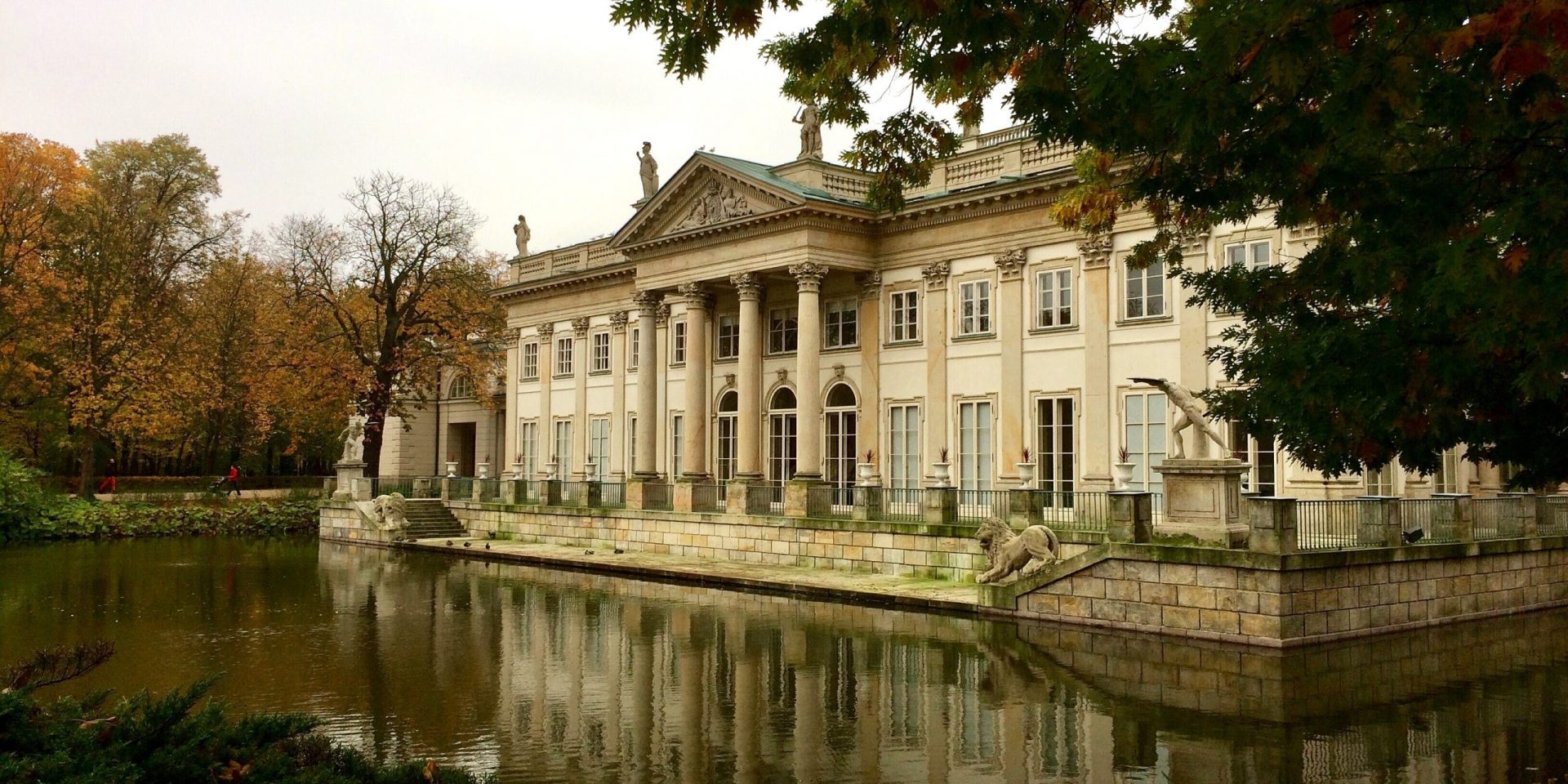
- Belweder Palace: Located in Łazienki Park, this is a working residence and hosts state guests. It’s the one you might see while strolling through the park.
- Wisła Castle: A residence in the mountains in southern Poland.
- Ciechocinek Manor: A spa town residence in central Poland.
- Hel Residence: On the Hel Peninsula by the Baltic Sea.
The Chancellery of the President manages these properties and supports the president’s constitutional duties.
How Poles Actually Talk About Their President
Here’s what you’ll notice living here: Poles verbally downgrade the president (“he does nothing, it’s all just ceremonies”) but emotionally react strongly to presidential actions.
A veto on a social policy bill? Outrage or celebration, depending on which side of the political divide your friends sit on. A pardon for a controversial figure? Dinner-table arguments for weeks. A presidential speech after a national tragedy? Analyzed word by word.
Older Poles often frame current presidential behaviour through the lens of communist-era mistrust. The constitutional design, with its checks and balances, reflects that history. Power is deliberately spread out because Poles have seen what happens when it’s concentrated.
When the president and prime minister come from the same political family, things run relatively smoothly. When they don’t, like now, the friction becomes visible. You see it in news cycles, in how long legislation takes to pass, in public statements that seem designed to contradict each other.
For foreigners in Poland, this might seem chaotic. It’s actually the system working as designed, forcing negotiation between competing visions of the country.
Where to Check the Latest Information About Poland’s President
Political positions change quickly. This article explains the structure; these sites give you up-to-date details:
- Official Presidential Website: president.pl – official biography, news, constitutional duties
- Sejm and Senate: sejm.gov.pl – legislation tracker, constitutional text
- National Electoral Commission (PKW): pkw.gov.pl – election results and upcoming dates
- PISM: pism.pl – expert foreign policy analysis from Poland’s leading think tank
Frequently Asked Questions
Does Poland have a president?
Yes. Poland has a directly elected president who serves as the head of state. The president represents the country internationally, signs or vetoes legislation, and serves as commander-in-chief of the armed forces. However, the president does not run the day-to-day government; that’s the prime minister’s job.
Who runs Poland, the president or the prime minister?
The prime minister runs the government day to day, controlling ministries, the budget, and domestic policy. The president is the head of state with powers to veto laws, influence foreign policy, and make key judicial appointments. They’re meant to balance each other, which works smoothly when they agree and creates friction when they don’t. For more on Poland’s political history and why this system developed, see our related guide.
Who is the president of Poland right now?
As of 2026, Karol Nawrocki is the President of the Republic of Poland. He took office on 6 August 2025 after defeating Rafał Trzaskowski in the runoff election. For the latest official information, check president.pl.
Why does Poland have both a president and a prime minister?
Poland’s 1997 Constitution established a semi-presidential system with deliberate checks and balances. After decades of communist rule where power was concentrated, Poles designed a system that spreads authority between multiple institutions. The president provides continuity and represents the state; the prime minister handles governance with parliamentary accountability.
How long can someone be president of Poland?
Presidents serve five-year terms and can only be re-elected once. The maximum time anyone can serve as president is 10 years, as Andrzej Duda demonstrated from 2015 to 2025.
What is the head of state of Poland called in Polish?
The official title is Prezydent Rzeczypospolitej Polskiej, which translates to “President of the Republic of Poland.” In everyday speech, Poles simply say prezydent.
The Bottom Line on Poland’s Presidency
The President of the Republic of Poland isn’t just a ceremonial figurehead, but he’s also not running the government. The office sits in a deliberate tension with the prime minister, equipped with real tools (the veto being the sharpest) that matter most during political conflict.
Right now, Poland is in a period of cohabitation, with President Nawrocki and Prime Minister Tusk coming from opposing political camps. If you’re living here or planning to move, you’ll see this play out in news cycles, policy delays, and the endless debates among your Polish colleagues and friends.
Understanding this system won’t change your daily life much. But it will help you make sense of the news, understand why your Polish friends get heated about politics, and see why that white palace on Krakowskie Przedmieście matters more than a first glance suggests.
For more practical guides on moving to Poland and navigating life here, explore the rest of EXPATSPOLAND. And if you’ve lived through a Polish election or watched a presidential veto shake up your workplace conversations, we’d love to hear your story.
Meta Title: President of the Republic of Poland: Role, Powers & 2026 Guide
Meta Description: Who is the President of Poland? Learn what the office actually does, how it differs from the PM, and why it matters for expats living in Poland.
